Hot upstairs or drafty rooms
When the upstairs bakes or the room over the garage never cools, the attic is usually thin, uneven or leaking air. Sealing the gaps and building up depth is often the fix.
Discuss your projectB&J Pico Rivera Insulation Company handles attic insulation and air sealing for homes in Pico Rivera and nearby cities like Downey and Whittier. We also remove old, matted insulation and insulate crawl spaces under older houses with cold floors.
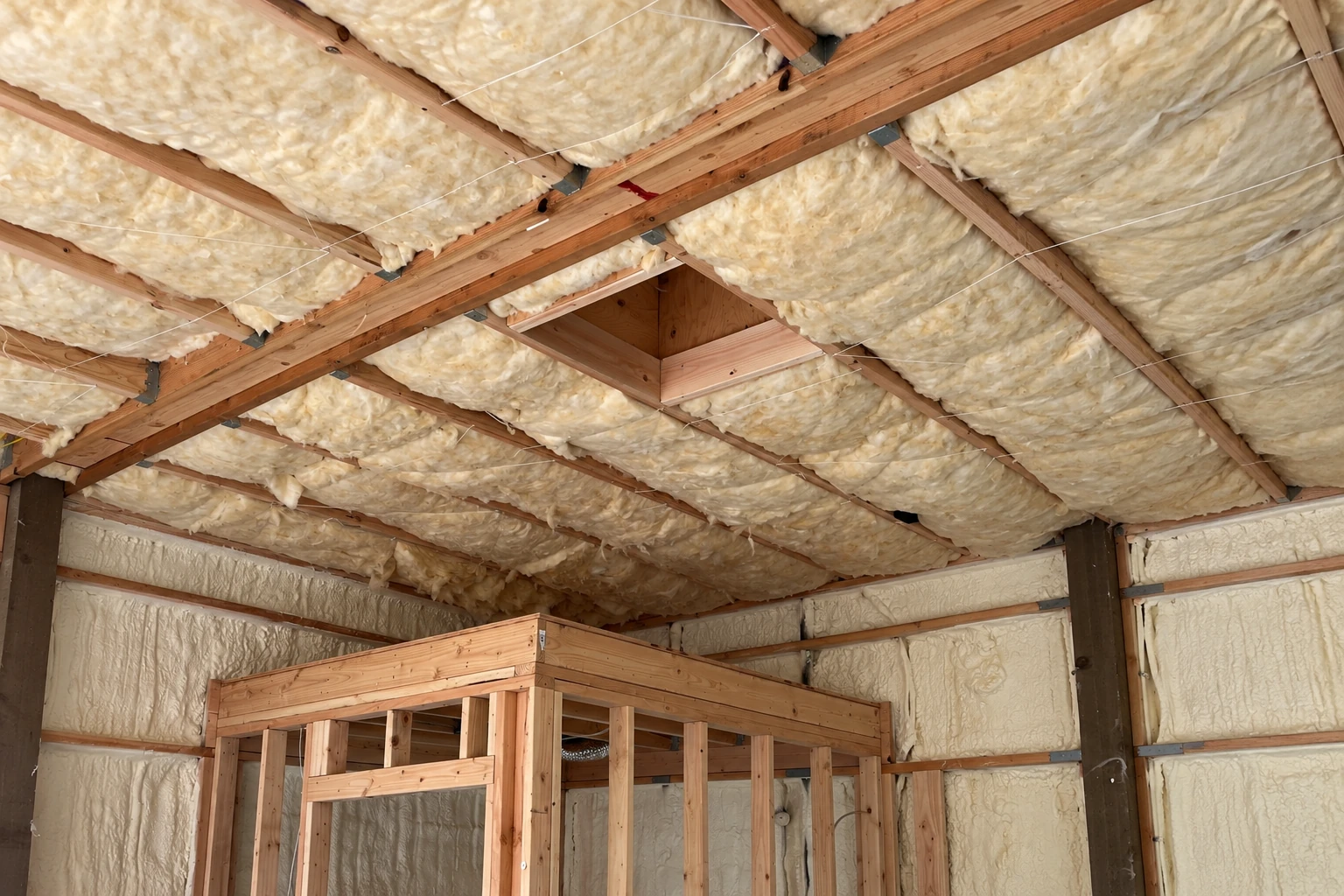
Most calls we get start with one of two things: a room that never feels right, or insulation up there that's past saving.
When the upstairs bakes or the room over the garage never cools, the attic is usually thin, uneven or leaking air. Sealing the gaps and building up depth is often the fix.
Discuss your projectInsulation that got soaked by a roof leak or soiled by rodents doesn't work and shouldn't stay. We clear it out, clean up and put in fresh material so the problem leaves with it.
Discuss your projectI go up, take photos and show you what's there, from the inches you have now to where the gaps are. Then you understand your own house and can spot a bad bid later.
If I find a roof leak, old wiring or soaked, dirty insulation, I'll tell you to deal with it first. Covering it with new material means paying twice when it shows up later.
We look at how your house is built, where the ducts run and what's already up there before we suggest a material. You get the reasons, not whatever's easiest to sell.
B&J Pico Rivera Insulation Company is an insulation contractor in Pico Rivera, CA, with 16 services and pages for 12 of the cities we work in. We keep upstairs rooms from baking, take the chill off floors and clear out insulation that's past saving. The price mostly moves with the size of the space and how easy it is to reach, what has to come out first and which material fits your house. The schedule turns on removal, on sealing gaps before anything goes in and on repairs like a roof leak that should come first. Your free on-site estimate comes in writing with photos of what I found.
Sprayed onto the underside of the roof, the walls or a crawl space, foam seals air and insulates in the same pass. We'll show you where it's worth the higher cost for your house and where it isn't.
If upstairs runs hot or the power bill climbs, the attic is usually where we start. We check how many inches are up there, keep the eave vents clear and build depth out to the edges, not just the middle.
Blown-in is loose fill sent through a hose, so it settles around wiring and framing where batts leave gaps. It's the usual way we top up an attic once the leaks underneath are sealed.
For a house that's drafty, hot or uneven from room to room, we look at the attic, walls and crawl space together. That way your money goes first to where your house loses the most.
When old insulation is soaked, flattened or full of droppings, we take it out before anything new goes in, because covering it keeps the problem in your attic. We bag it as it comes out.
Cold floors over a crawl space usually mean the underside of the house is bare or the old batts have fallen. We insulate under the floor and check for moisture first, since wet insulation stops working.
Older houses often have little or nothing inside the outside walls, which you feel as a chill near them. We can fill closed walls through small holes, or insulate open walls during a remodel before the drywall goes up.
We close the leaks that let outside air into the living space, around plumbing, outlets, the wall between house and garage and the room above it. A drafty house often needs this more than it needs more insulation.
When a home or building has a basement, we insulate its walls and the framing along the top of the foundation. We check for moisture first, because insulation over a damp wall traps the problem instead of solving it.
This dense foam blocks moisture and heat, so it fits crawl spaces and other spots that can get damp. It costs more than open-cell, so we use it where that density earns its keep.
Open-cell foam is softer and lighter than closed-cell, seals air well and cuts down sound between rooms. It costs less, so it's a common pick for walls and the underside of a roof where moisture isn't the concern.
For landlords, property managers and small commercial buildings, we plan the work around tenants and business hours. My years doing upkeep in rentals taught me how to get in, do the job and keep the place running.
This is heavy plastic laid over the dirt under your house, so ground moisture stays out of the floor and the insulation. We overlap and seal the seams so it stays in place when someone crawls through later.
Outside the crawl space, a vapor barrier can belong in walls or ceilings, depending on how the house is built. We explain where one helps before we put any up, because the wrong spot can trap moisture.
Before we add anything to the attic, we seal around can lights, pipes, wires and the hatch, because that's where indoor air slips out. With those closed, the insulation on top isn't fighting a draft.
This is insulation added to a house that's already built and lived in, without tearing it apart. It's the usual route for an older home, and we work around the wiring, framing and old material already there.
I spent years doing upkeep for a property management company, crawling through attics and under houses between tenants, and that's where I learned how insulation, air leaks, roofs and old wiring affect each other. I started B&J Pico Rivera Insulation Company here in 2020 to do that work carefully for people who own their homes.
Our calls come from homeowners with older houses and from landlords and property managers who know what a covered-up problem costs. We're fully licensed and insured, our promise is satisfaction guaranteed, and you can read more about our crew.
Years in rental homes taught us to protect the path to the attic, bag old material as it comes out and leave your rooms the way we found them.
Before work starts, we check with the building office for your address, city or county. If the job calls for a permit, we handle the paperwork and the inspections.
We're based in Pico Rivera and work in many of the cities around it, including Downey, Norwalk and Whittier, plus nearby county areas, with the same careful work wherever the job is.
We reply within one business day to set a time. I come out, look at the job, and you get a written estimate with photos of what I found, free and with no obligation.
Our installers do the work, and I go over it with you before we call it done, so anything you're unsure about gets answered while we're still there.
Our hours are Mon–Sun, 7 AM–11 PM, so you can call after work or on a weekend and set up a visit at a time that fits.
In the form, mention your house's age, which rooms run hot or cold and any roof leak you know of, so I come out ready to look in the right places.
These example photos show blown-in, batts and spray foam in attics, walls and crawl spaces, so you can point to what you're curious about.
Straight answers to what people ask before an insulation job, from cost to when you can go back inside.
It depends on what's up there, so I price it after a look at your attic, not over the phone. Old material full of droppings, lots of can lights and pipes to seal, or a tight hatch all add work, and foam costs more than loose fill. Your free estimate comes in writing with photos, so you can see what you're paying for.
That depends on the job, and I'll tell you what to expect when I write your estimate. A straight top-up of loose fill goes quickest. Clearing out old insulation, sealing gaps around lights and pipes first or spraying foam all add time, and so does any repair that has to happen before we start.
For blown-in or batts, you can usually stay home and just keep kids and pets away from the work area. Spray foam is different, because everyone, pets included, stays out until the re-entry time, when it's safe to come back in, which we take from the foam maker's instructions. We'll give you that time before we start.
It depends on the job, so we check with the city's Building Division before work starts. Pico Rivera's permit list names additions, alterations, re-roofing and HVAC work, which need zoning review, plan check or both before a permit is issued, and it doesn't name insulation on its own. If your job does need a permit, we handle the paperwork and inspections.
Only if it's soaked, flattened or full of droppings, because new material on top keeps the problem in your attic. Dry, clean insulation can usually stay, and we add to it once the gaps under it are sealed. I'll show you photos so you can see which kind you've got.
Usually, sealing the gaps and topping up with blown-in is the better buy. Foam costs more, but it seals air while it insulates, and when your ductwork runs through the attic, foam on the underside of the roof brings those ducts inside the insulated space. I'll look at where your ducts are and tell you which way I'd go.
Call (562) 271-1051 or use our contact page, and I'll come out and show you what's up there before you decide anything.