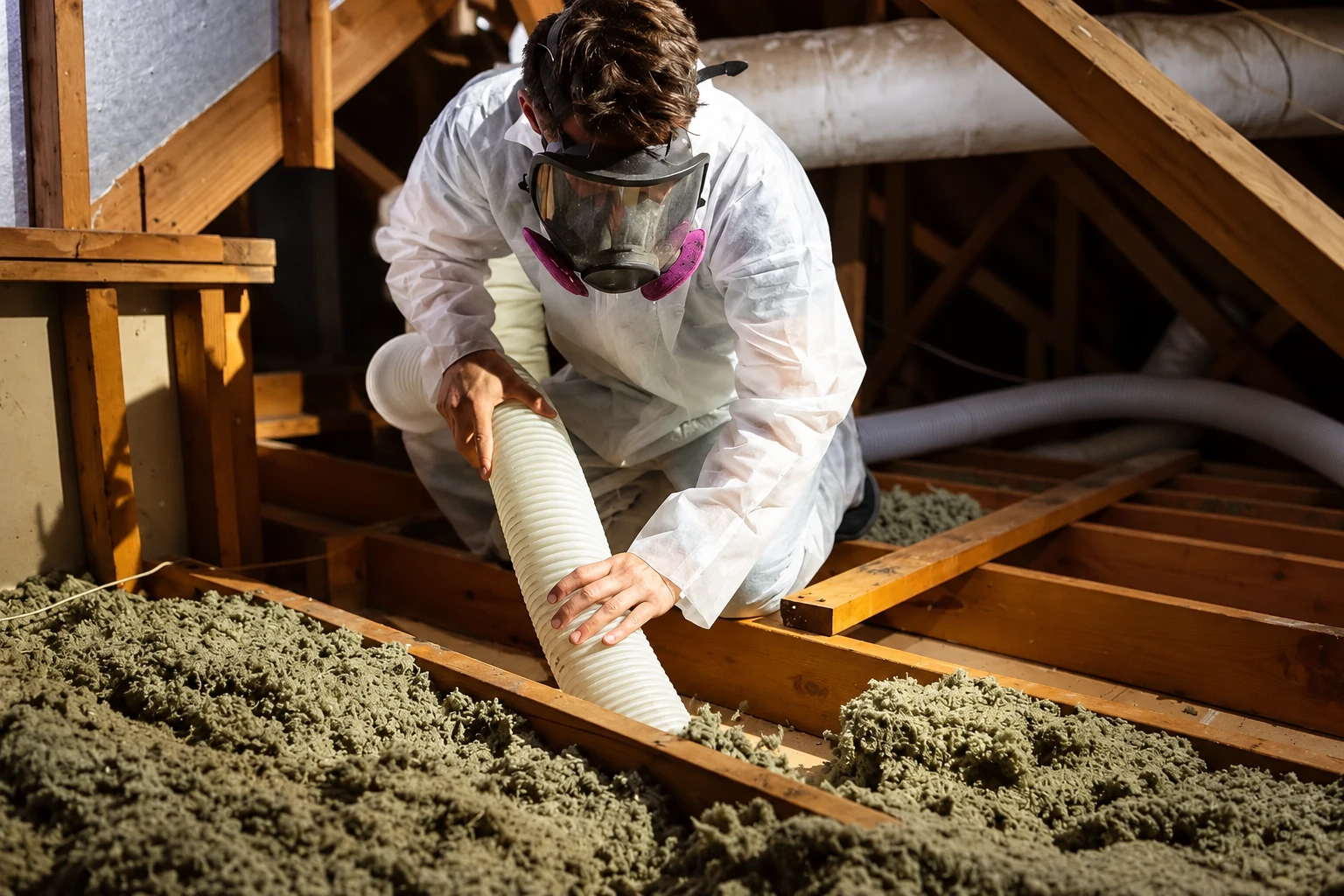
Older houses with a thin layer
Older houses often have just a few inches left up there after years of settling, and blowing a fresh layer over dry material is usually the simplest way to bring it back.
Upstairs rooms that stay hot and a power bill that climbs often point to thin attic insulation. We seal the ceiling, then fill it evenly.
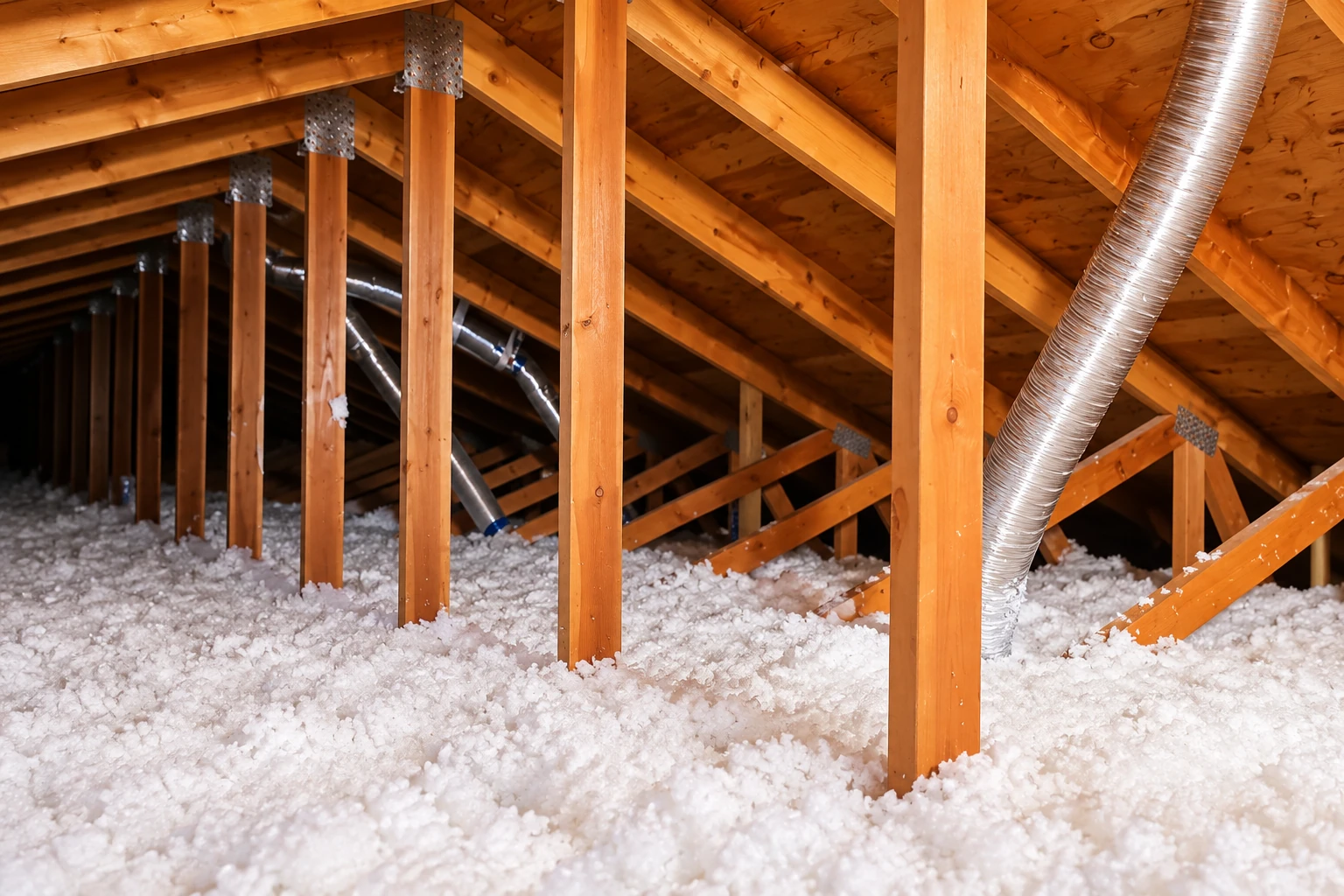
Blown-in insulation is loose fill, either cellulose or fiberglass, blown through a hose across the ceiling of a vented attic, and for a lot of Pico Rivera homes it's a practical way to turn a thin, patchy attic into one even layer that slows heat coming through the ceiling.
The price mostly comes down to how big the attic is, how many inches are already up there, how much sealing the ceiling needs before anything goes in and how easy the hatch is to work through. The schedule turns on whether something has to be fixed first and on what the building office that covers your address asks for. Your own figure comes from the estimate, which I write after I've been up in the attic, and it comes with photos of what I found.
I spent years doing upkeep for a property management company, crawling through attics between tenants, before I started this business in Pico Rivera in 2020. What I learned up there is that insulation, air leaks, roofs and old wiring all affect each other, so I look at all of it before I quote anything.
I take photos in your attic and walk you through them before quoting, so you understand your own house and can spot a bad quote later, from us or anyone else.
If there's a roof leak or old wiring, I'll tell you to deal with it first, because burying it under new insulation only hides it until it costs you more.
We're fully licensed and insured, and our installers keep things clean, because I spent years working in homes while families lived in them. Satisfaction guaranteed.
I start at the hatch, measuring how many inches are already up there and checking what shape it's in. If the old material is soaked or full of droppings, a fresh layer on top just keeps the problem, so we'd talk about insulation removal first. Blown-in fills a crowded attic well, and I'll explain how cellulose and fiberglass differ so you can pick the one that suits yours.
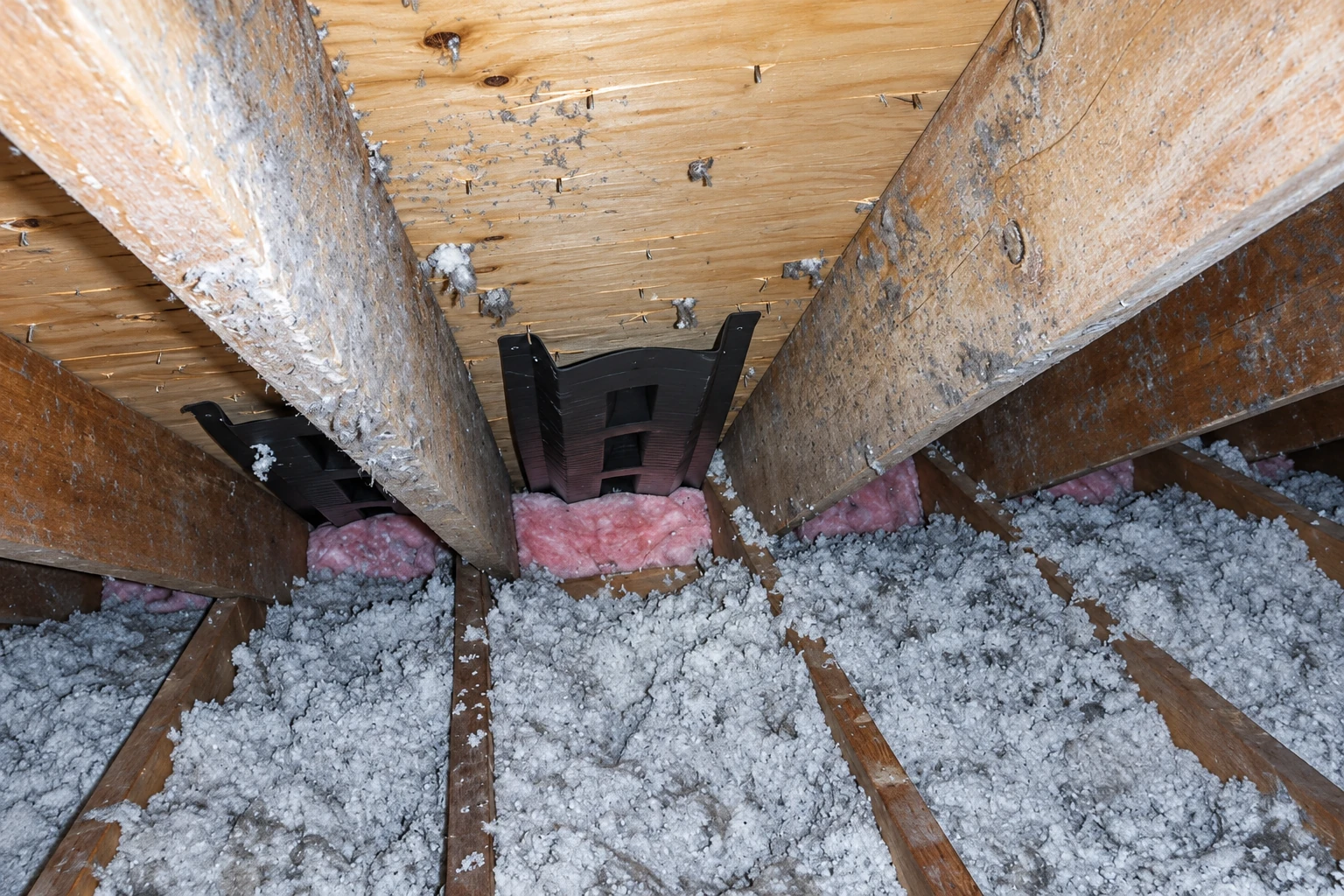
Next we seal the ceiling, because insulation slows heat but doesn't stop air, and gaps around can lights, pipes and the attic hatch will pull air right through a new layer. Recessed lights get checked before anything covers them, since the light's rating and local code decide whether it can be buried or needs clearance and an airtight box around it. Where there's a vent at the eaves, baffles, short channels that hold insulation back from the vent, usually go in each rafter bay so the attic keeps breathing.
Then our installers blow it in to an even depth across the whole attic, all the way out to where the roof meets the walls, because a pile that's deep in the middle and thin at the edges leaves the weak spots right where heat gets in. Junction boxes stay where an electrician can still reach them, and I go over the attic with you before we call it done. If the attic is only part of it, like cold floors or a hot room over the garage, we can look at home insulation for the rest of the house.
Older houses often have just a few inches left up there after years of settling, and blowing a fresh layer over dry material is usually the simplest way to bring it back.
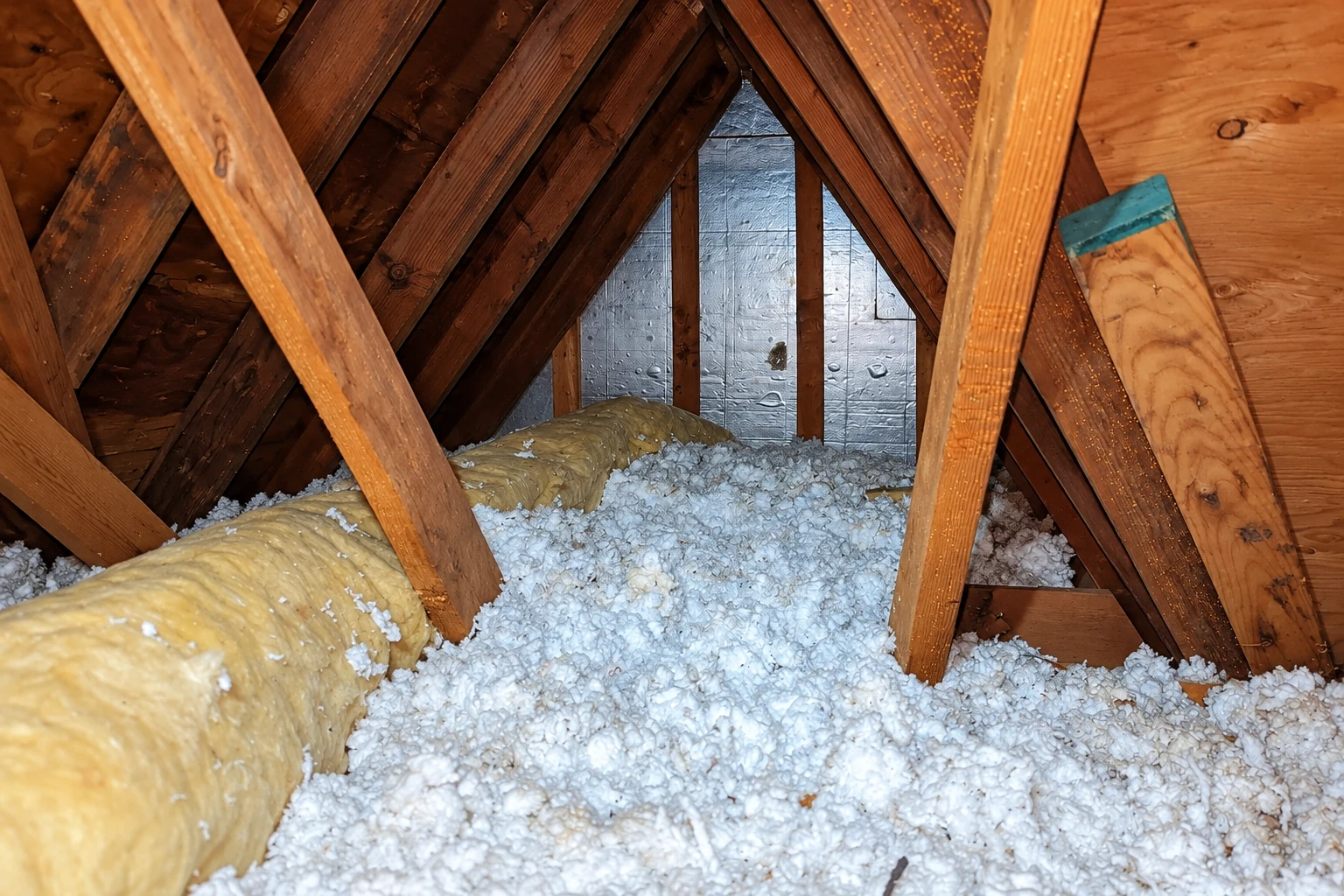
Loose fill flows around braces, pipes and wiring where batts would leave gaps, so even a cramped, busy attic can end up with one continuous layer across the ceiling.
Landlords and property managers call us between tenants, because an empty unit is the easiest time to seal and fill the attic, and they know what a covered-up problem costs later.
Foam costs more but seals air while it insulates, so if your ductwork runs through the attic, I'll tell you when foam is worth it over sealing and topping up.
Send the form and we'll reply within one business day to set a time. I come out, look at your attic, and you get photos of what I found with a free written estimate, no obligation.
Tell us where the hatch is and how tight it gets up there, because tight access changes how the crew works and is one of the things that moves the price.
Count the can lights in the rooms under the attic if you can, since each one has to be checked before any insulation goes over it.
Mention ceiling stains, a musty smell or signs of animals, because moisture and mold need sorting out first, and I'd rather plan for that than find it halfway through.
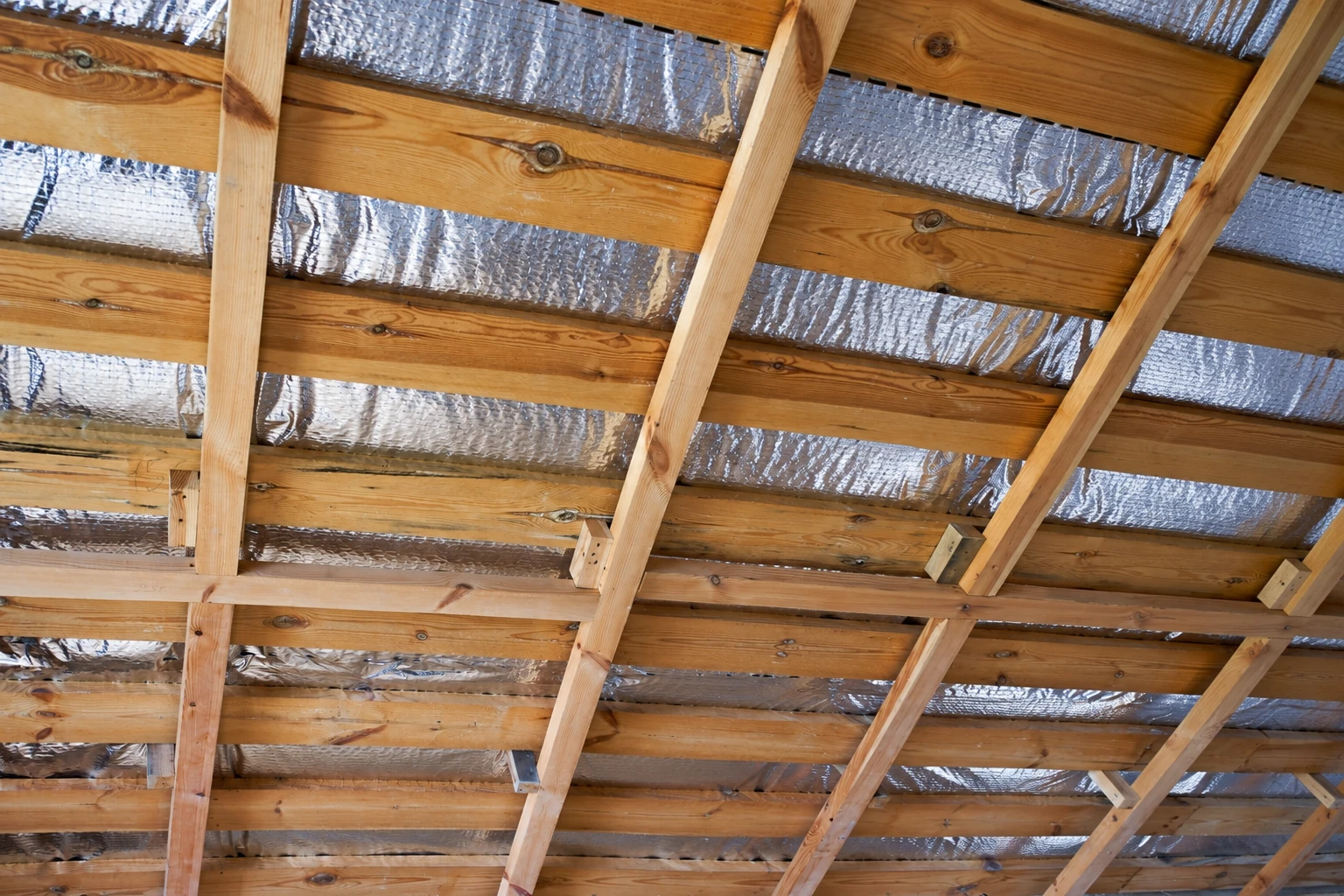
These photos show cellulose and fiberglass layers, baffles at the eaves and sealed hatches, the kinds of details we can talk through at your estimate.
Straight answers on cost, materials, permits and licensing, the things people ask most when they're deciding whether blown-in fits their attic.
Usually, yes. Blowing loose fill into an attic generally costs less than installing batts and gives better coverage, because it fills in around framing and wires instead of leaving gaps at the edge of each piece. Installation costs still vary from house to house, so compare written quotes for the same attic.
Pick cellulose for a crowded attic and fiberglass if holding its depth matters more to you. One insulation guide says cellulose insulates more per inch and flows better around obstructions, while blown fiberglass settles about 1% against about 10% for dry cellulose. I'll show you which way your attic leans when I'm up there.
Blown-in insulation around Los Angeles usually costs about $1,600 to $3,600 for a typical project. That's the going rate in the area, not our price. Where your house lands comes down to the things covered above, mostly attic size and how much sealing it needs, and your free on-site estimate gives your own figure.
The city's permit list doesn't settle it either way, so it's worth asking. Pico Rivera's Building Division handles permits, and its list names structural, electrical, plumbing and HVAC work but not insulation. Before we start, we check with the building office that covers your address, and if your job needs a permit, we handle the paperwork and inspections.
A state-licensed contractor, for most jobs. California's Contractors State License Board has an insulation and acoustical class that covers installing any insulating material for temperature or sound. The state's small-job exemption for unlicensed workers tops out at $1,000, and it only applies when the work needs no permit and the person has no helpers. We're fully licensed and insured.
Hire a pro if your attic shows any of the warning signs one insulation guide lists. Those are a multi-level attic, a lot of air sealing, moisture or mold, old knob-and-tube wiring, vermiculite that may contain asbestos, or tight access. You can look through the hatch on your own, but if you spot any of those, plan on a contractor.
We're open every day from 7 AM to 11 PM, so call (562) 271-1051 tonight or send the form and we'll set up a visit.