Spray foam insulation
We spray foam where loose fill can't do the job, like the room over the garage or an attic with ductwork running through it. It costs more, so I'll tell you plainly when it's worth it.
B&J Pico Rivera Insulation Company is an insulation contractor working in Norwalk, CA. We seal and insulate attics, walls and crawl spaces in older Norwalk houses, and we remove old insulation that's soaked or packed down.
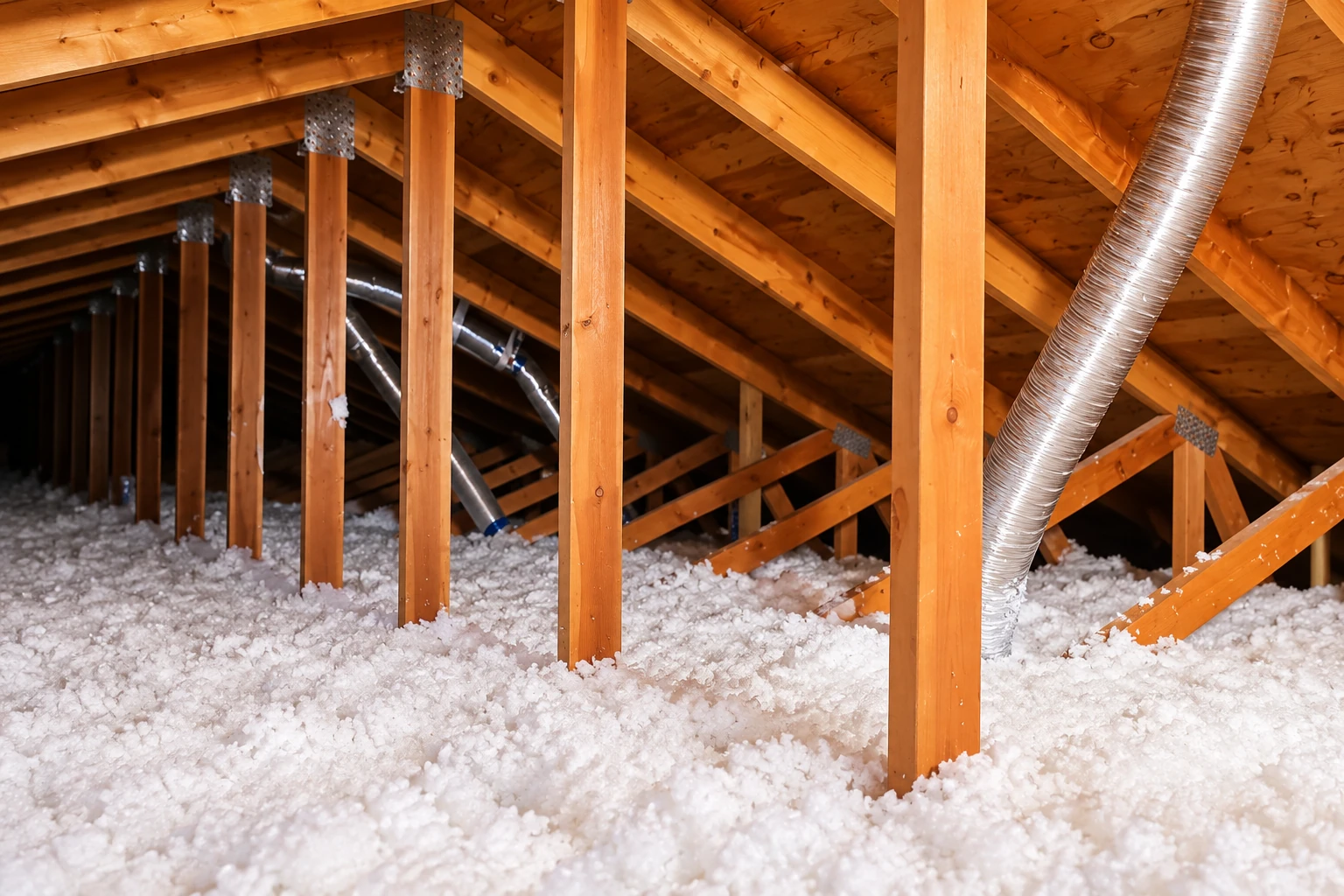
Most of the Norwalk houses we get into are older single-story homes with an attic that's easy to reach and a few inches of tired insulation that's packed down over the years. A lot of them also have ductwork running through that attic, and that changes how I'd insulate it. Sealing the gaps and topping up with loose fill usually wins on cost, but when the ducts live up there, foam on the roofline can be worth the extra money because it puts them inside the sealed space.
What moves the price is how much is already up there, whether old material has to come out first, how many gaps need sealing and whether you go with loose fill or foam. The schedule turns on the same things, plus any roof or wiring repair that has to happen before we cover it up. Your estimate gives you your own number in writing, with photos of what I found.
In California, anyone who contracts for work on a job that needs a building permit, or who uses employees, must hold a current license from the Contractors State License Board. The same goes for any job of $1,000 or more in labor and materials combined. We're fully licensed and insured. Before work starts, we check with the building office that covers your address, and if the job calls for a permit, we handle the paperwork and inspections. We're an insulation contractor based in Pico Rivera, CA, and we do the same work next door in Downey and South Whittier, and up in Montebello.
If I find a roof leak, old wiring or insulation that's soaked or full of droppings, I'll tell you to deal with it first, because new material laid over it only hides it.
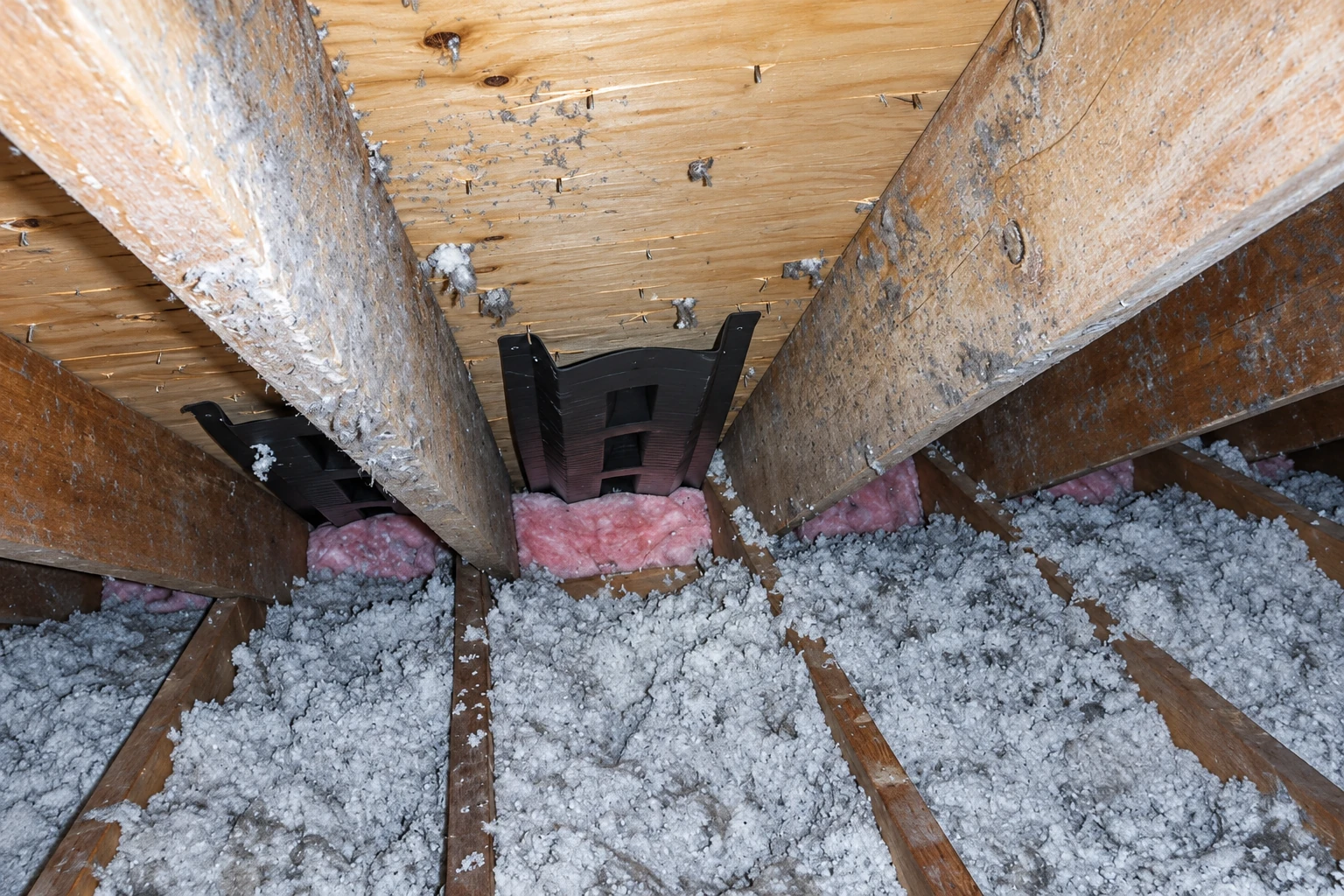
Look through the attic hatch with a flashlight. If you can see the tops of the ceiling joists, or bare spots near the edges, the insulation is thin and worth a call.
We keep insulation off the eave vents and bring the edges up as deep as the middle, since a buried vent stops the attic from breathing and lets moisture into the framing.
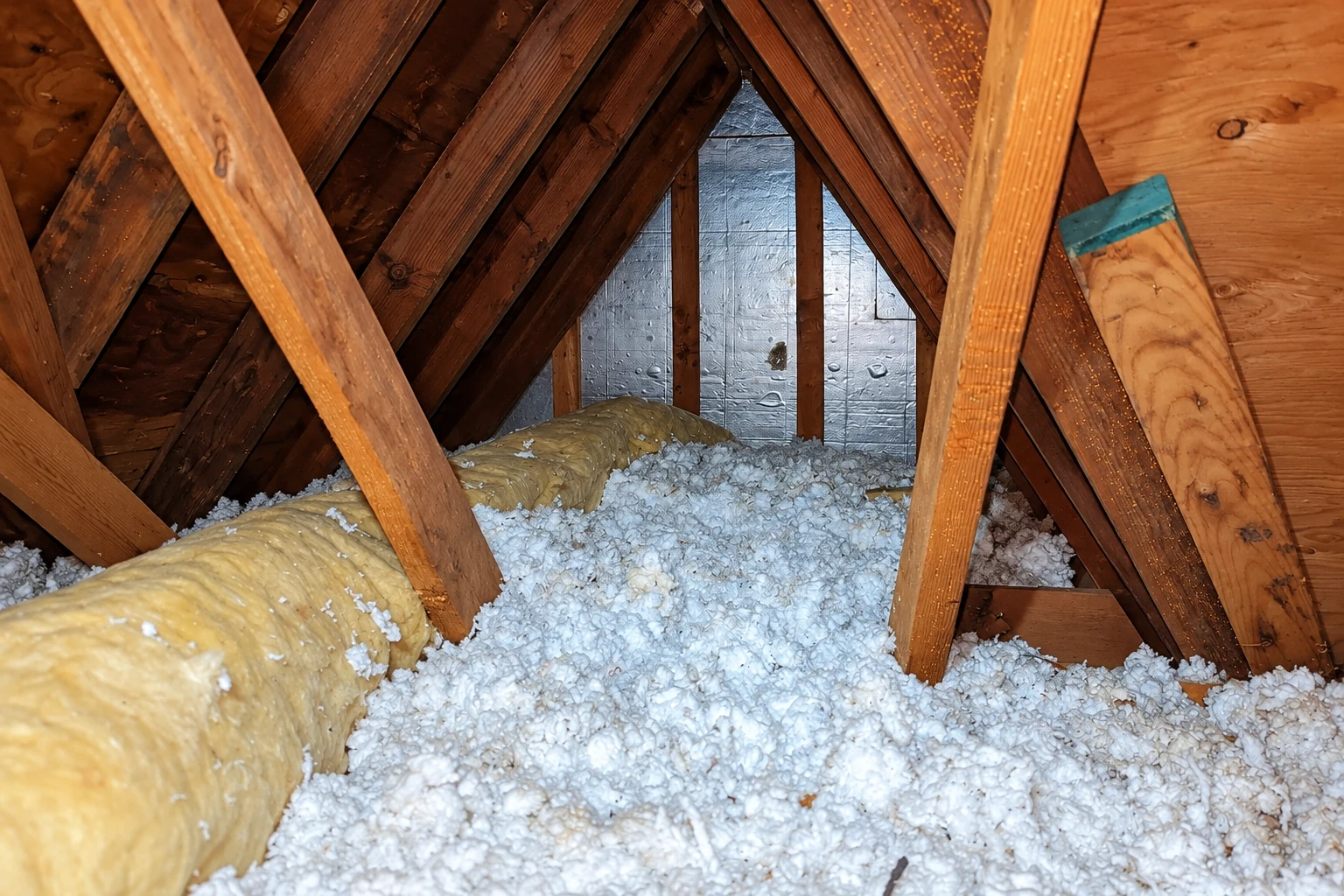
We spray foam where loose fill can't do the job, like the room over the garage or an attic with ductwork running through it. It costs more, so I'll tell you plainly when it's worth it.
Most Norwalk calls start in the attic. We measure the inches already up there, seal the gaps, clear the eave vents and bring coverage up evenly, so the rooms below hold their temperature better.
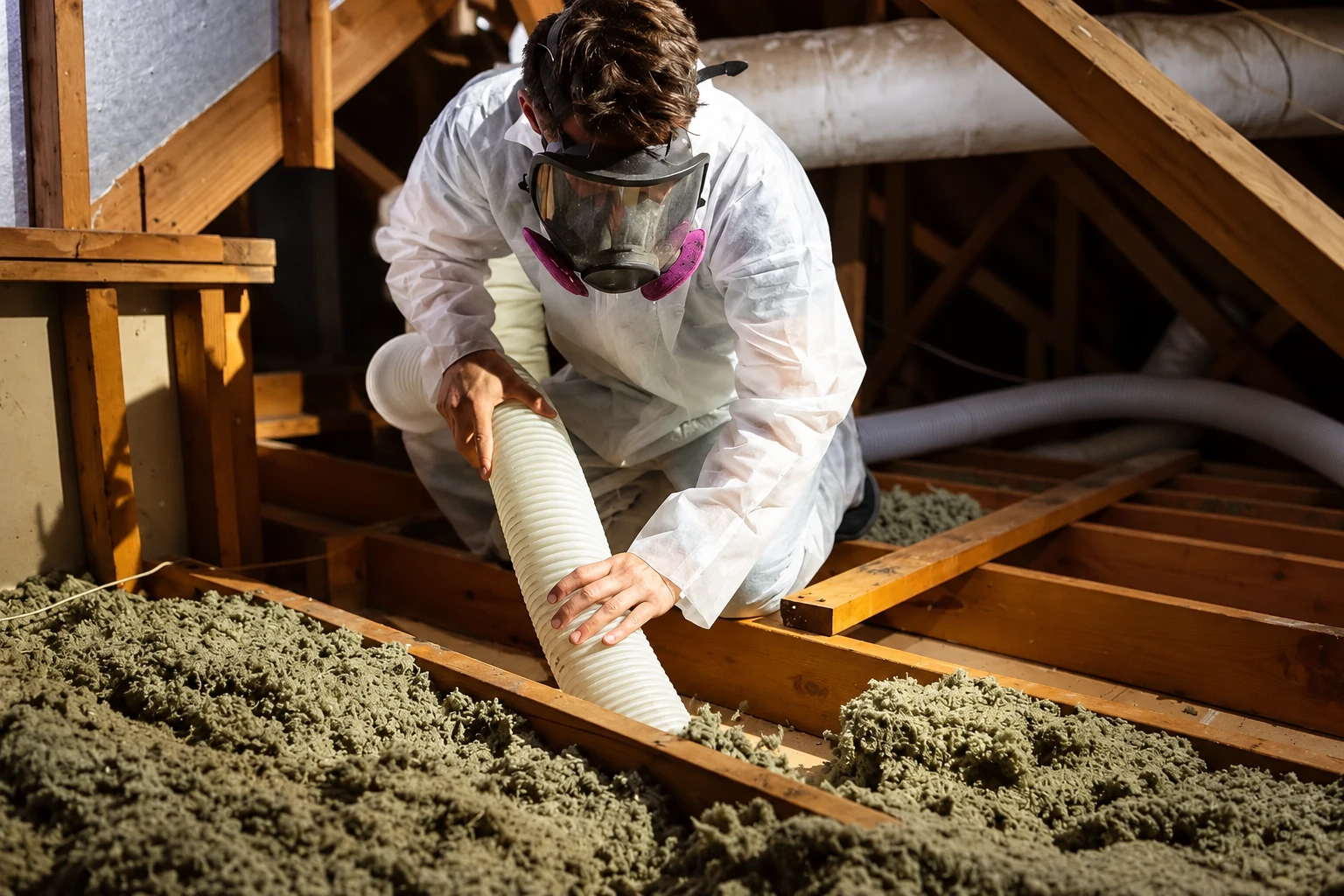
Blown-in insulation is loose fill blown through a hose, and it's usually the most practical way to top up an older attic. We raise the R-value, how well it slows heat, edge to edge.
If the whole house feels drafty or the power bill seems high for its size, we look at the attic, walls and floors together and tell you which one is worth doing first.
When old insulation is soaked, matted or full of droppings, we take it out before anything new goes in, because covering it keeps the problem. We bag it up and clean as we go.
Cold floors over a crawl space usually mean thin or fallen insulation between the floor joists. We check for damp spots first, since wet ground under the house undoes the work, then fit it back snug.
Outside walls in older houses are often empty or thinly filled. We can blow insulation into the cavities through small holes and patch them, so you don't have to open up the drywall.
Air sealing means closing the gaps before insulating. We find where outside air sneaks in around doors, outlets, plumbing and wiring, because insulation can't stop a draft that blows right past it.
Few houses around here have basements, but when yours has one or a below-grade room, we insulate the walls with materials that can handle the moisture that comes through concrete.
Closed-cell foam is dense foam that blocks moisture as well as heat. We use it in tight or damp spots, like under a floor or along a garage wall, where it has to do both jobs.
Open-cell foam is softer and lighter, good at filling odd shapes and quieting noise between rooms. We use it on rooflines and inside walls where moisture isn't the main worry.
We insulate small commercial buildings and rental properties too, working around tenants and business hours. Property managers like that I show them what's up there before we quote anything.
A crawl space vapor barrier is a heavy plastic sheet laid over the dirt under the house to keep ground moisture out of the floor framing. We overlap and seal the seams so it stays put.
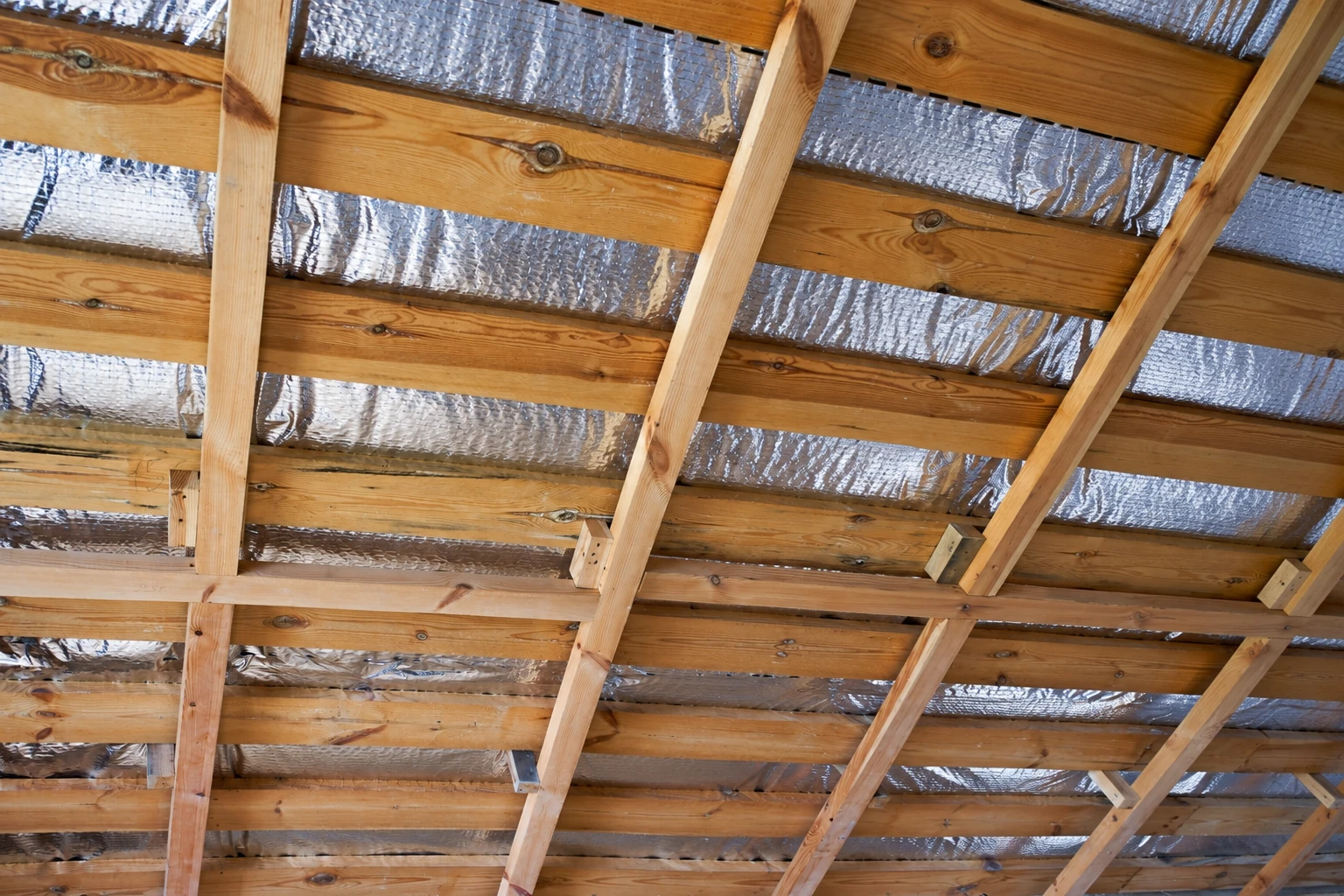
Some walls, ceilings and floors need a vapor barrier on the right side of the insulation to keep moisture from collecting inside. We'll tell you whether yours does, because the wrong side can trap water.
Before we add anything to an attic, we seal the can lights, plumbing stacks, wire holes and hatch from above. That's where most of a drafty house's leaks start, and it's the step that gets skipped.
Retrofit insulation means adding insulation to a finished house without tearing it apart. We work through the attic, the crawl space and small wall holes, and keep it clean since you're living there.
Send the form and we'll get back to you within one business day to set a time. I come out, look at the job and write you a free estimate on site, with no obligation.
I look at the job and write the estimate myself, so the person pricing your attic is the one who has actually been up in it and seen what's there.
Our installers do the work with covers down and old material bagged, because I spent years working in homes where people were living and I know what a mess costs you.
I go over the finished work with you before we call it done, and our promise is satisfaction guaranteed, so speak up at the walkthrough if anything looks off to you.
These are the questions Norwalk homeowners ask us about licenses, doing small jobs themselves, staying home during the work and old insulation.
Only for a small job that meets every one of the state board's conditions. The work can't need a building permit, the person can't use employees or advertise as a licensed contractor, and labor, materials and all other costs together have to stay under $1,000. That limit used to be $500 before the state raised it to $1,000, so older advice may be out of date.
You may not need one. The state board says owners who improve their own property, doing the work themselves or with their own employees paid in wages, may be exempt as owner-builders. Check how that applies to you before you start, and if you'd rather not crawl around up there, I'll still show you what you've got and what I'd do.
For blown-in loose fill and air sealing, most families stay home and keep kids and pets out of the work area. Spray foam is different, because the house has to be empty while it's sprayed and until the re-entry time, the wait before it's safe to come back, has passed. We give you that timing before we schedule the job.
Add on top when the old material is dry and clean, because it still does its part and removal costs extra. Take it out when it's been soaked by a roof leak or is full of droppings, since new insulation over that keeps the problem in your attic. I'll show you what I find and tell you which one your house needs.
Each city below has its own page. If yours isn't listed, call or use the form to ask, since we work in many cities around Pico Rivera and in nearby county areas too.
Call (562) 271-1051 or use the form and ask for our license details, so you can check who you're hiring before work starts.