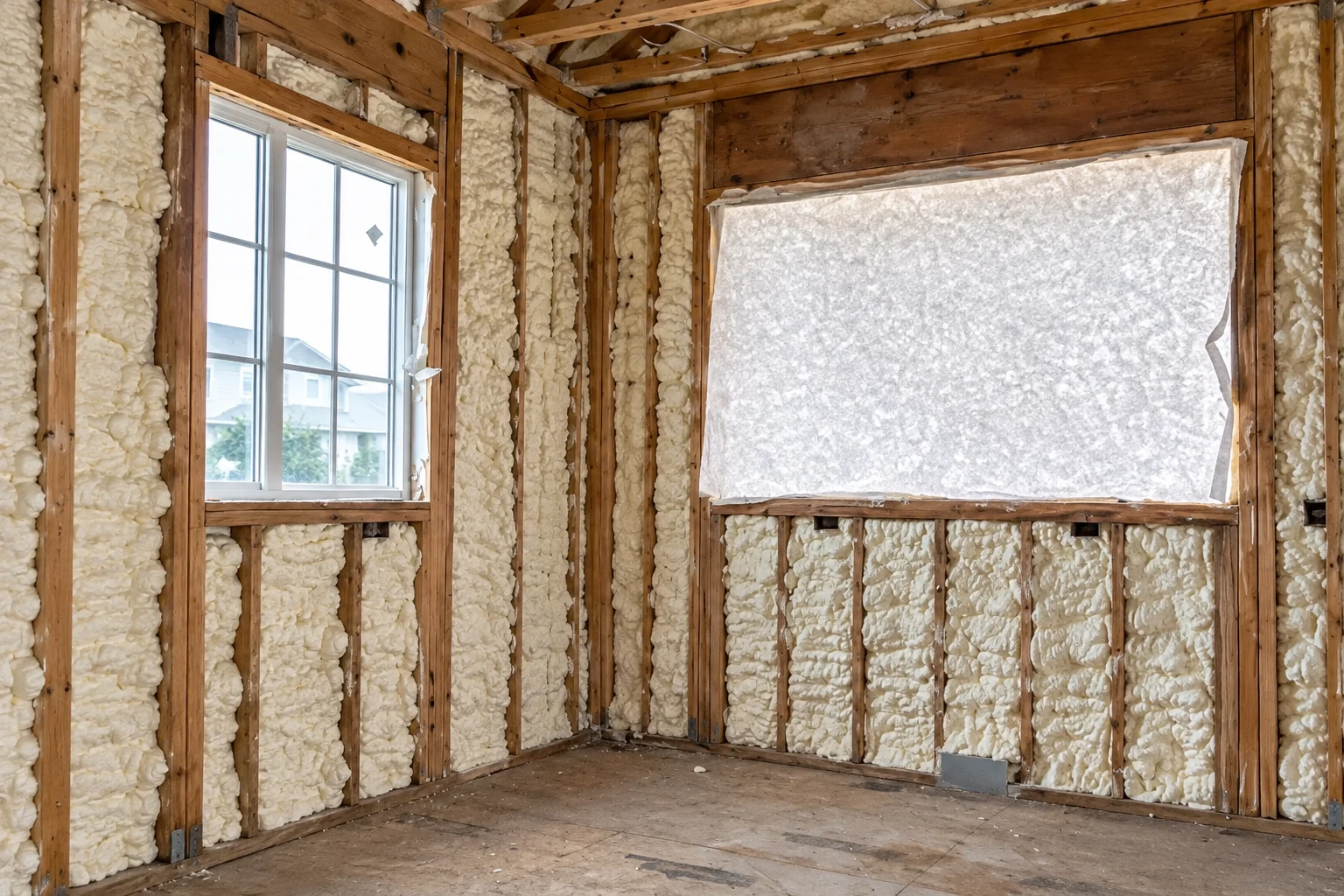
Hot rooms upstairs
When the upstairs or the room over the garage stays hot all afternoon, the attic is usually the first place I look, because the whole ceiling sits right under it.
Hot upstairs rooms and a power bill that climbs every summer? We add insulation to your finished house without tearing it apart.
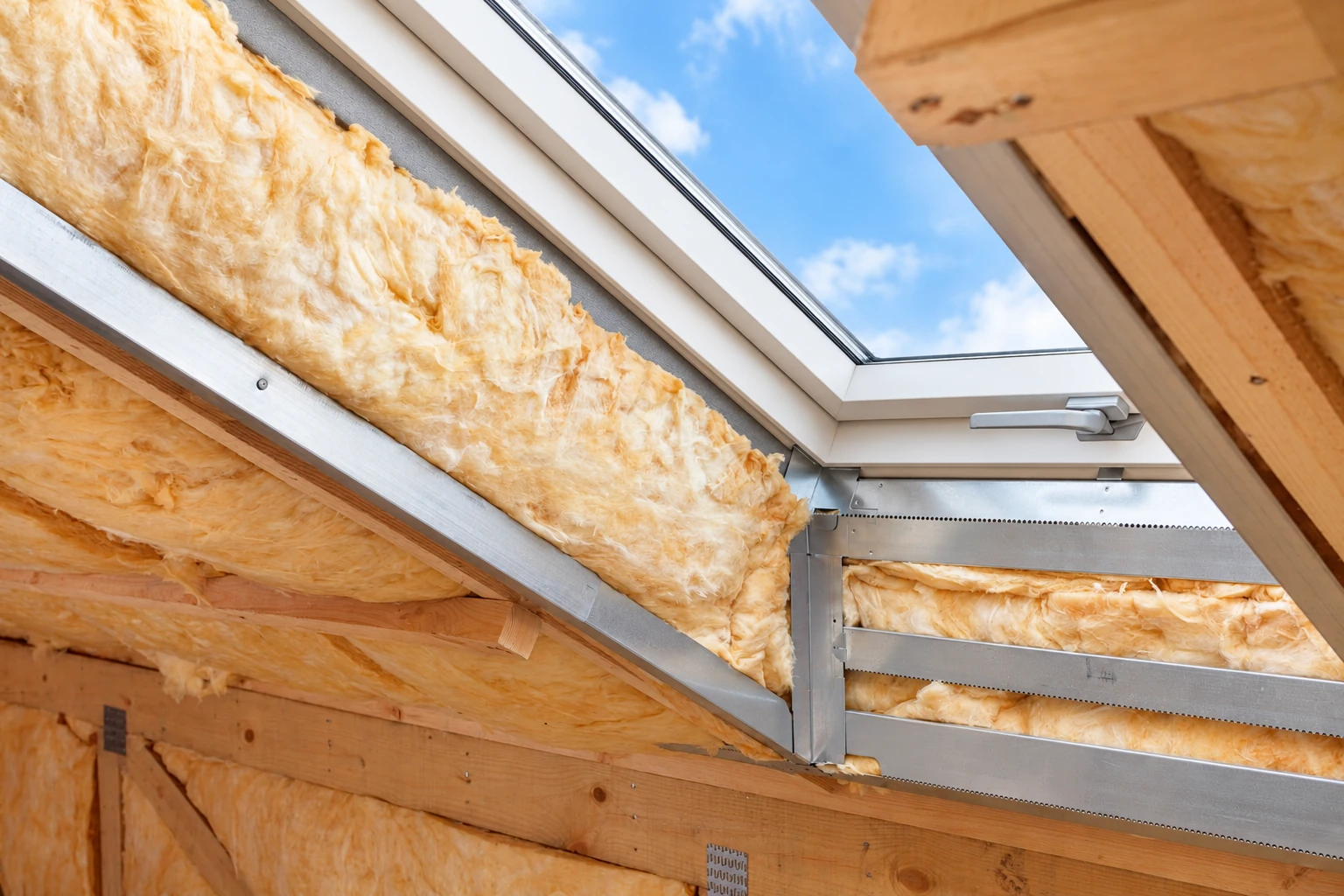
Retrofit insulation in Pico Rivera means adding insulation to a house that's already built and lived in, either over the existing attic floor or blown into the wall cavities, so your rooms stay more comfortable and outside noise carries less.
A lot of the older houses we see here have a thin, tired layer in the attic and sometimes nothing in the walls. The price moves with how much area we cover, whether old material has to come out first, the type of insulation you pick and how much gap sealing the attic needs. The schedule turns on those same things plus any permit, and you get a written estimate with photos of what I found.
Before work starts, we check with the building office that covers your address, and if the job needs a permit, we handle the paperwork and inspections. We're based in Pico Rivera and work in many of the cities around it, plus nearby county areas where the county handles building permits.
I go up, take pictures of what's really there and walk you through them with the estimate, so you understand your own house and can judge anyone else's quote too.
If I find a roof leak, soaked insulation or old wiring, I'll tell you to deal with that first, because new insulation laid over a problem just hides it until it gets worse.
I spent years working in houses where people were living, so our installers protect your floors, keep the mess contained and clean up before they leave.
Retrofit means working in a house that's finished and lived in, so the first step is deciding with you whether the attic or the walls come first. I go up, check how many inches are already there and photograph anything wet, full of droppings or sitting on old wiring, because new material over a problem keeps the problem. Most of the time attic insulation comes first, since it's the easiest place to reach and it covers every room on the top floor.
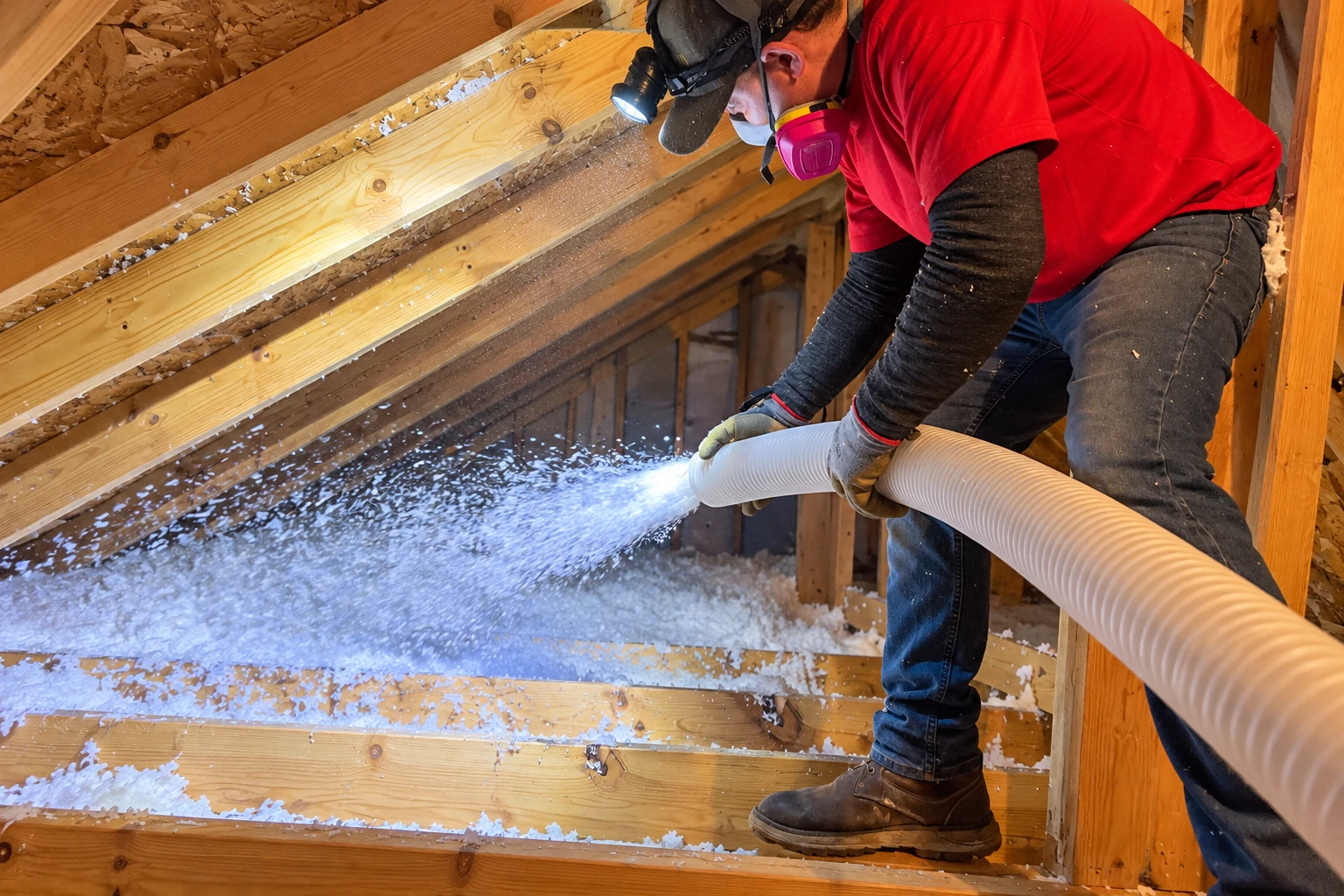
In the attic, our crew does the air sealing first, closing the gaps around pipes, wires, the hatch and can lights, because insulation laid over a draft just gets air pushed through it. We block big openings, keep material clear of hot flue pipes and set baffles, short chutes at the eaves, so the vents keep the attic breathing. Then we blow in loose fill through a hose to an even depth across the whole ceiling, edges included, since thin edges are the most common miss.
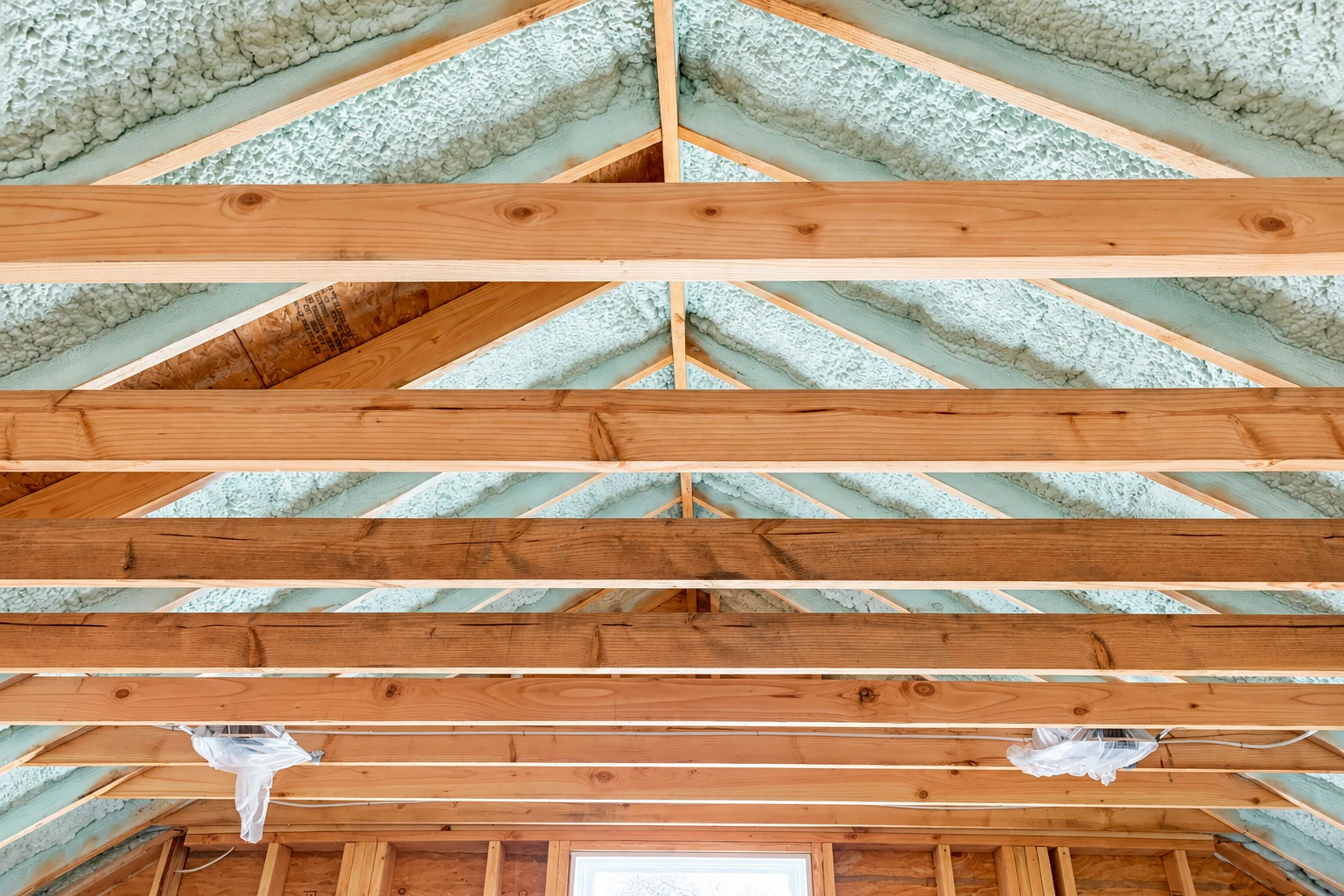
People often ask about spray foam insulation instead. Foam costs more and seals air while it insulates, but in most attics, sealing the gaps and topping up loose fill comes out ahead, unless your ductwork runs up there, where foam can earn its cost. When our installers finish, I go over the work with you before we call it done.
When the upstairs or the room over the garage stays hot all afternoon, the attic is usually the first place I look, because the whole ceiling sits right under it.
If you can see the tops of the ceiling joists from the hatch, there isn't much insulation left. Topping it up helps, as long as the old layer underneath is dry and clean.
Older walls often have little or nothing inside them, so they feel cold to the touch and street noise comes right through. Filling the cavities helps with both comfort and sound.
Landlords and property managers call us to insulate while a unit sits empty, because the work is easier with nobody living there and we catch leaks or damage before the next tenant moves in.
We reply within one business day to set a time for me to come out. I look over your attic and walls, then give you photos and a written estimate, free and with no obligation.
The year your house went up tells me what's likely in the attic and walls, and how carefully we'll need to plan around older paint and wiring before anyone drills.
If you've seen loose, pebbly, gray-brown fill in the attic, say so in your note, because that may be vermiculite and it changes the plan before anyone climbs up.
A hot upstairs, cold floors over the garage or a drafty hallway each point somewhere different, so telling me which rooms feel worst helps me know where to look first.
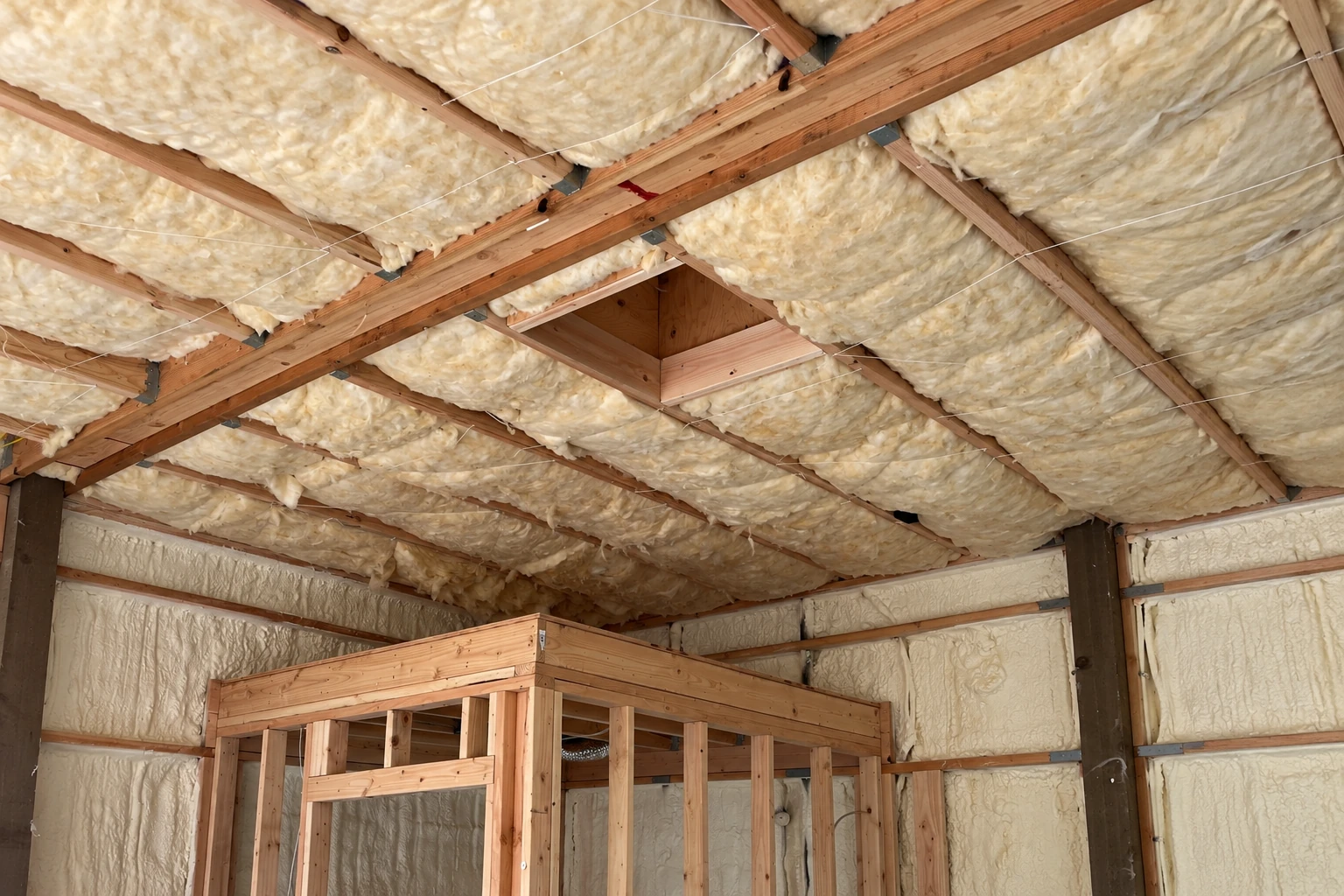
These example photos show blown-in attic fill, baffles at the eaves and patched wall holes, so you can point at what you'd like to discuss.
These are the questions homeowners ask us most before adding insulation to a house they already live in.
Blown-in insulation in the Los Angeles area usually costs about $1,600 to $3,600 per job, and that's the going rate around here, not a quote from us. Where yours lands depends on the type of insulation you choose, how much area we cover and whether old material has to come out first. Your written estimate gives you the real number.
A permit isn't automatic either way, because the City of Pico Rivera says it depends on the scope of the project, the city's building codes and the type of work. The city's Building Division enforces the rules for building homes in Pico Rivera. As I said above, we check with the office that covers your address and handle any permit and inspections the job needs.
We drill small holes near the top of each wall cavity, from inside or outside, fill each cavity with blown-in insulation and patch the holes, so the walls stay put while you live there. In a house built before 1980, lead safety rules can apply depending on how much wall surface gets disturbed, so I'll talk with you about lead-safe work before we drill.
Leave it alone and don't disturb it. The EPA advises treating vermiculite insulation as if it contains asbestos, so it either stays undisturbed or gets removed by a trained professional. If I find it during the visit, we stop and work out the plan with you before anything else happens up there.
The Contractors State License Board's C-2 Insulation and Acoustical class covers installing insulation for temperature or sound control. It's fair to ask any contractor for their license before they set foot in your attic. We're fully licensed and insured, and I'm glad to show you our license when I come out for the estimate.
Call (562) 271-1051 any day of the week from 7 AM to 11 PM, or send the form whenever it suits you.