
A musty smell inside
When the house smells damp and there's bare dirt underneath, moisture from the ground is often working its way up into the floor, and covering that dirt keeps it down.
A musty smell, cold floors or bare dirt under the house? We cover the crawl space floor so ground moisture stays in the ground.
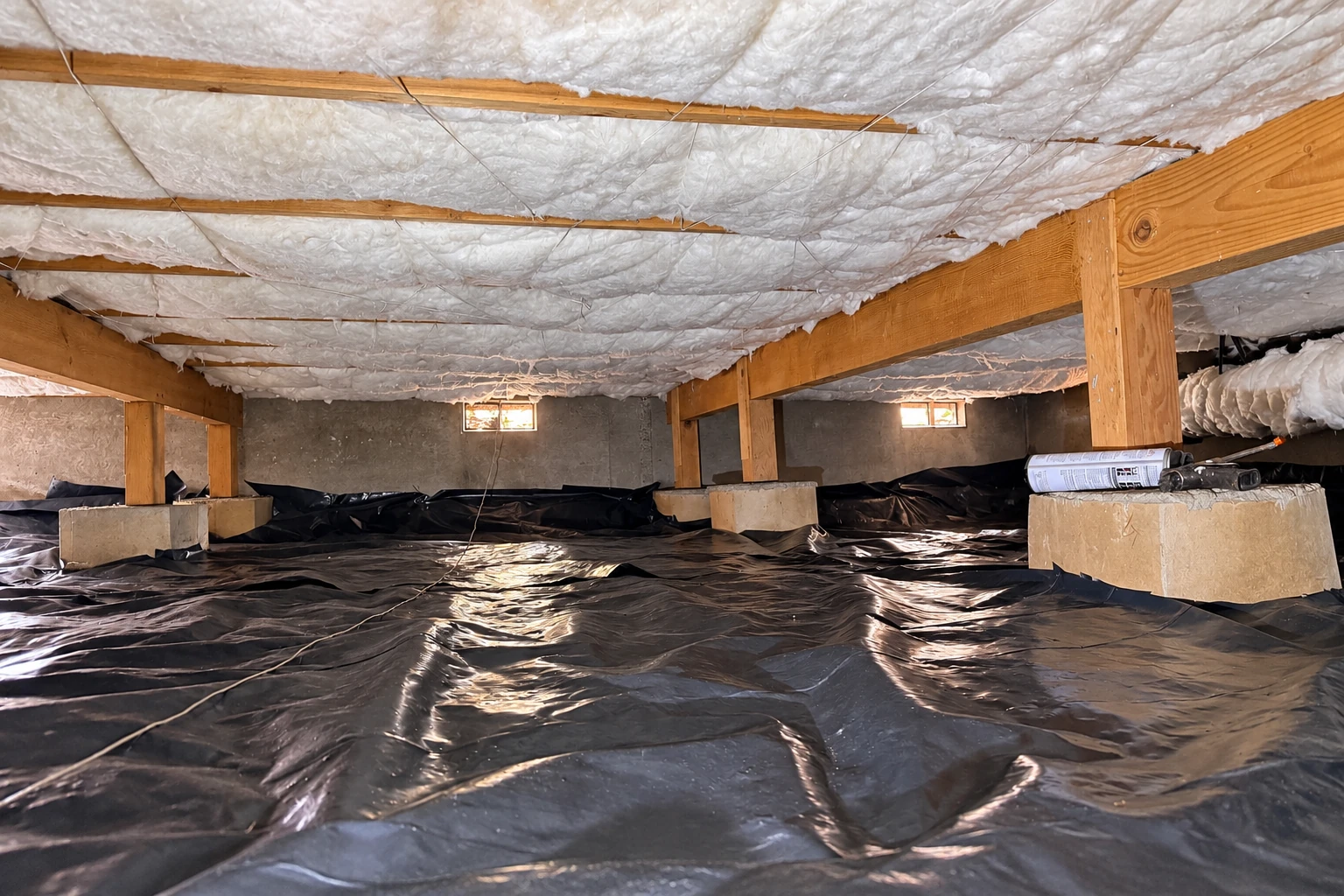
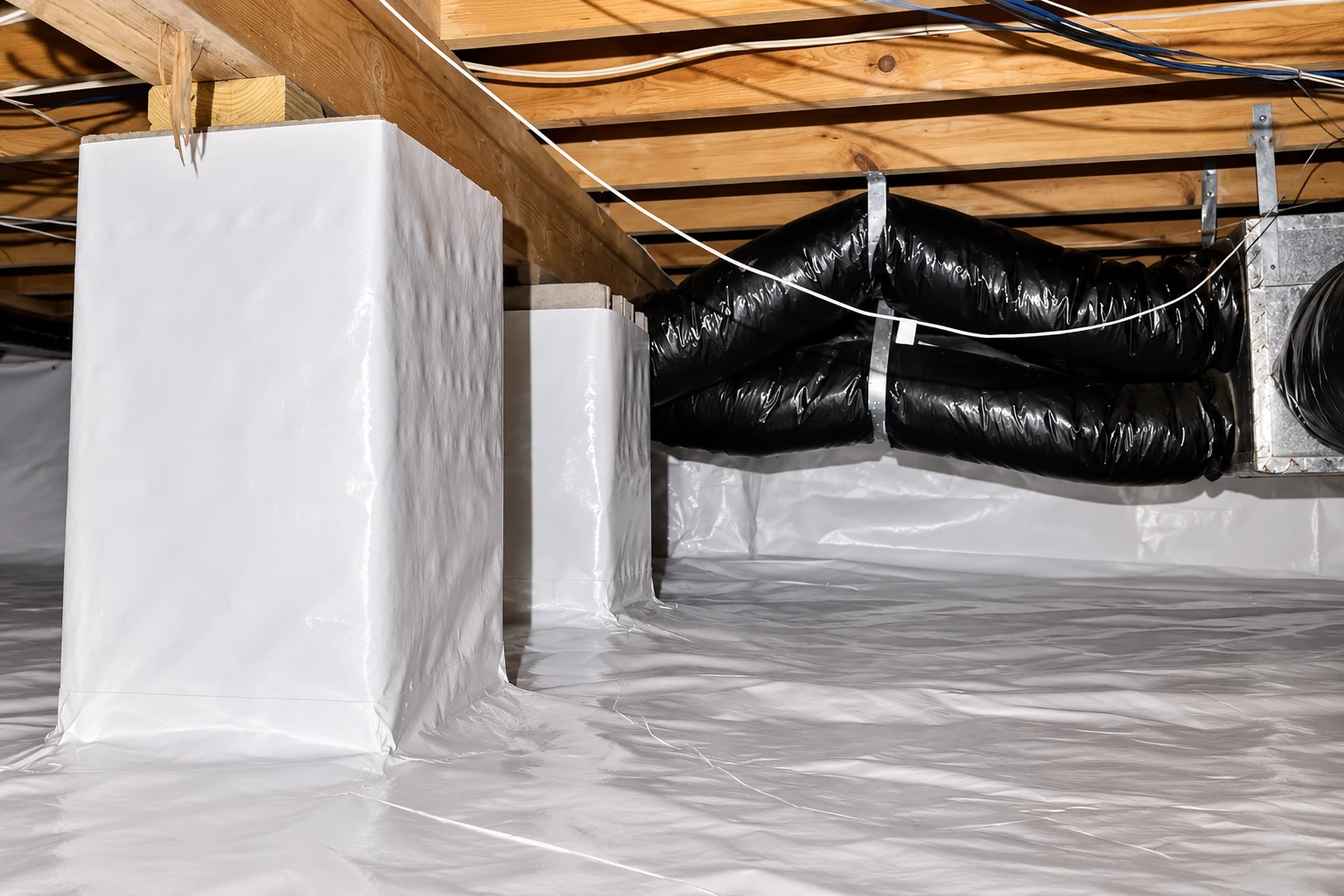
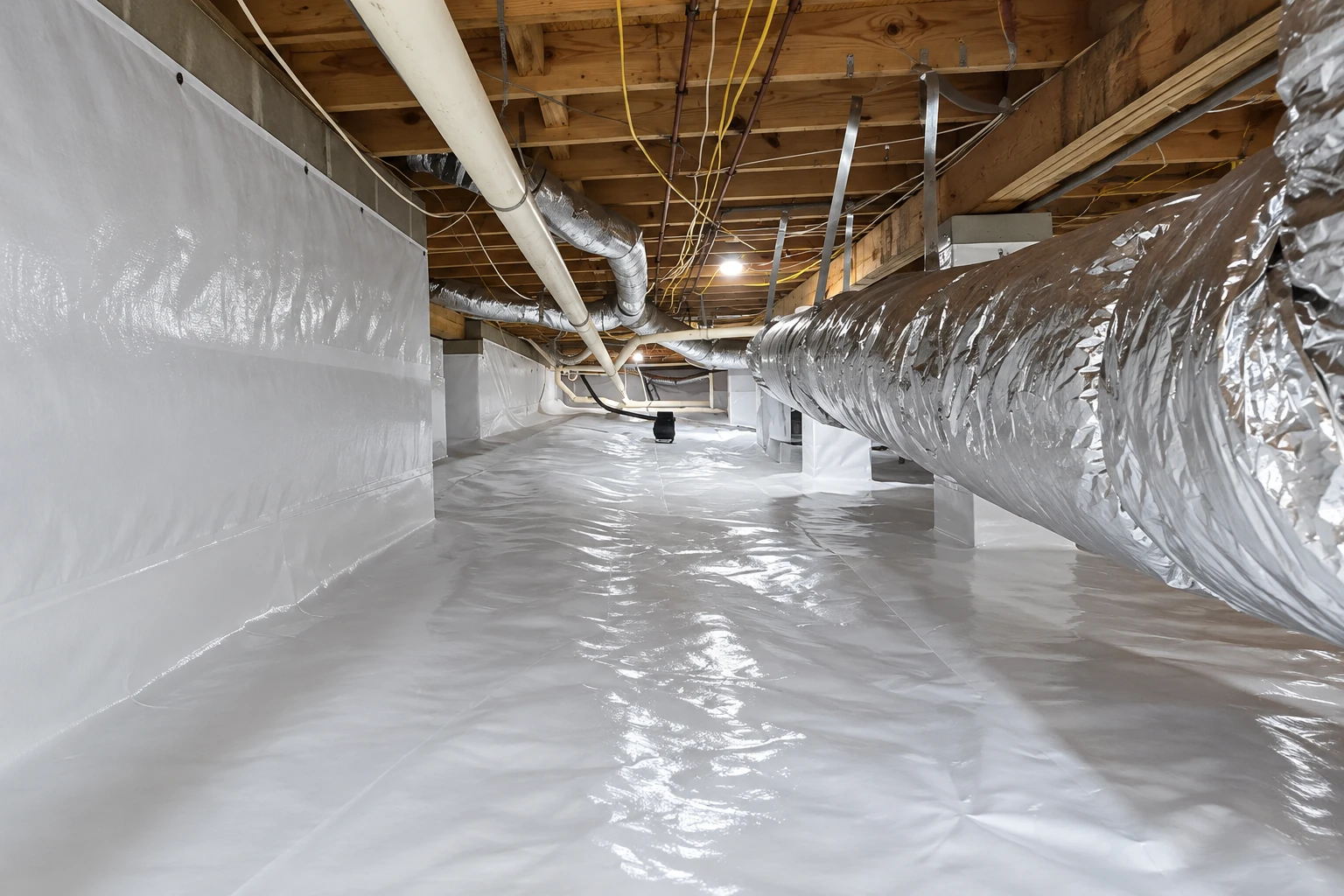
A crawl space vapor barrier in Pico Rivera is plastic sheeting laid across the dirt under your house, so ground moisture and soil gases stay down there instead of working up through gaps in the floor into your rooms.
We're based in Pico Rivera and work in many of the cities around it, plus nearby county areas where the county handles building permits. The price moves with the size of the crawl space, how easy it is to get into, how much has to be cleared out, which sheeting you choose and whether a water problem needs fixing first. The schedule turns mostly on that last one, because drainage work has to come before the liner, and your written estimate comes with photos of what I found so you can see why.
Before work starts, we check with the building office that covers your address, city or county, and if the job calls for a permit, we handle the paperwork and inspections.
I crawl under the house, take photos of what's down there and walk you through them, so you know what you're paying for and can spot a bad job later.
I spent years doing upkeep in homes where people were living, so our installers keep the mess under the house, and I go over the finished work with you before we call it done.
We're fully licensed and insured, and I came to this after years under rental houses for a property manager, so I know how crawl spaces, plumbing and old wiring affect each other.
I start by going under the house with a light and a camera, because a liner only works if water isn't collecting down there. If I find signs of it, I show you where it's coming from and tell you what to fix before we lay anything, even if that means the liner waits.
Once the ground is dry and clear, our installers cover the whole floor, overlap the seams and finish the edges so no bare dirt is left showing. If someone has to crawl through to service the furnace, we talk with you about which sheeting holds up to that traffic, since a torn liner lets moisture right back up.
A crawl space liner is one part of keeping the house dry and comfortable. If moisture is getting into walls or other parts of the house too, our vapor barrier installation work covers those spots, and if the upstairs runs hot and the power bill is high, attic air sealing closes the gaps up top that keep pulling air in from below.
When the house smells damp and there's bare dirt underneath, moisture from the ground is often working its way up into the floor, and covering that dirt keeps it down.
If the furnace or ducts live under the house, somebody crawls through every time they need service, so the liner has to be picked to take that wear without tearing.
Many older houses we see around Pico Rivera have nothing on the ground below, and covering the soil is usually the first fix before insulation or anything else goes in.
Landlords and property managers call us when a unit sits empty, because a damp crawl space that gets covered up instead of fixed costs more once the next tenant moves in.
Send the form and we'll get back to you within one business day to set a time. I'll come out, look under the house and give you a free written estimate with photos, with no obligation.
Let us know where the crawl space hatch is and whether it's tight or blocked, since getting the crew and the sheeting under the house shapes the plan and the schedule.
Puddles after rain, a damp smell or sprinklers that soak the foundation are worth mentioning, because any water problem gets sorted out before the liner goes down.
If you keep boxes or old materials under the house, plan to move them before work day, because the plastic has to cover the whole floor to do its job.
These photos show sheeting weights, overlapped seams and service paths you can talk over with us when we look at your crawl space.
Straight answers on vents, sheeting thickness, permits, licensing and radon for homeowners thinking about covering the crawl space floor.
Yes. Federal guidance says the plastic ground cover belongs down there whether the crawl space is vented or sealed, so if you're still deciding about your vents, the liner comes first either way. In a vented crawl space, the main moisture source is liquid water from a yard sloped toward the house, missing drainage or heavy watering, so that gets fixed first.
Use sheeting at least 6 mil thick, which is the Department of Energy's minimum, and go heavier if people crawl through. One crawl space guide says 12-mil reinforced sheeting has a woven cord layer that keeps tears from spreading, so it takes the wear of furnace and duct visits. A vinyl runner over the path to the furnace helps too.
The city's permit list doesn't settle it for a liner on its own, since it names electrical and plumbing work, not vapor barriers. Electrical or plumbing work almost always needs a permit and city inspections, and that includes new outlets if your project adds power for equipment. Questions go to the Building Division at (562) 801-4360, Monday through Thursday, 7:30 a.m. to 5:00 p.m.
Only if the whole job is under $1,000, needs no permit and the handyman has no employees. That's California's limit for work without a contractor's license, so past it, ask to see a license before you hire anyone. We're fully licensed and insured.
If you want to know your radon level, yes, because a test is the only way to find out. California's state radon maps are advisory and can't show what's inside one particular house. Radon is one of the soil gases a liner keeps out of the crawl space, and a test tells you where your house stands.
We're open seven days a week from 7 AM to 11 PM, so call (562) 271-1051 or send the form whenever it suits you.