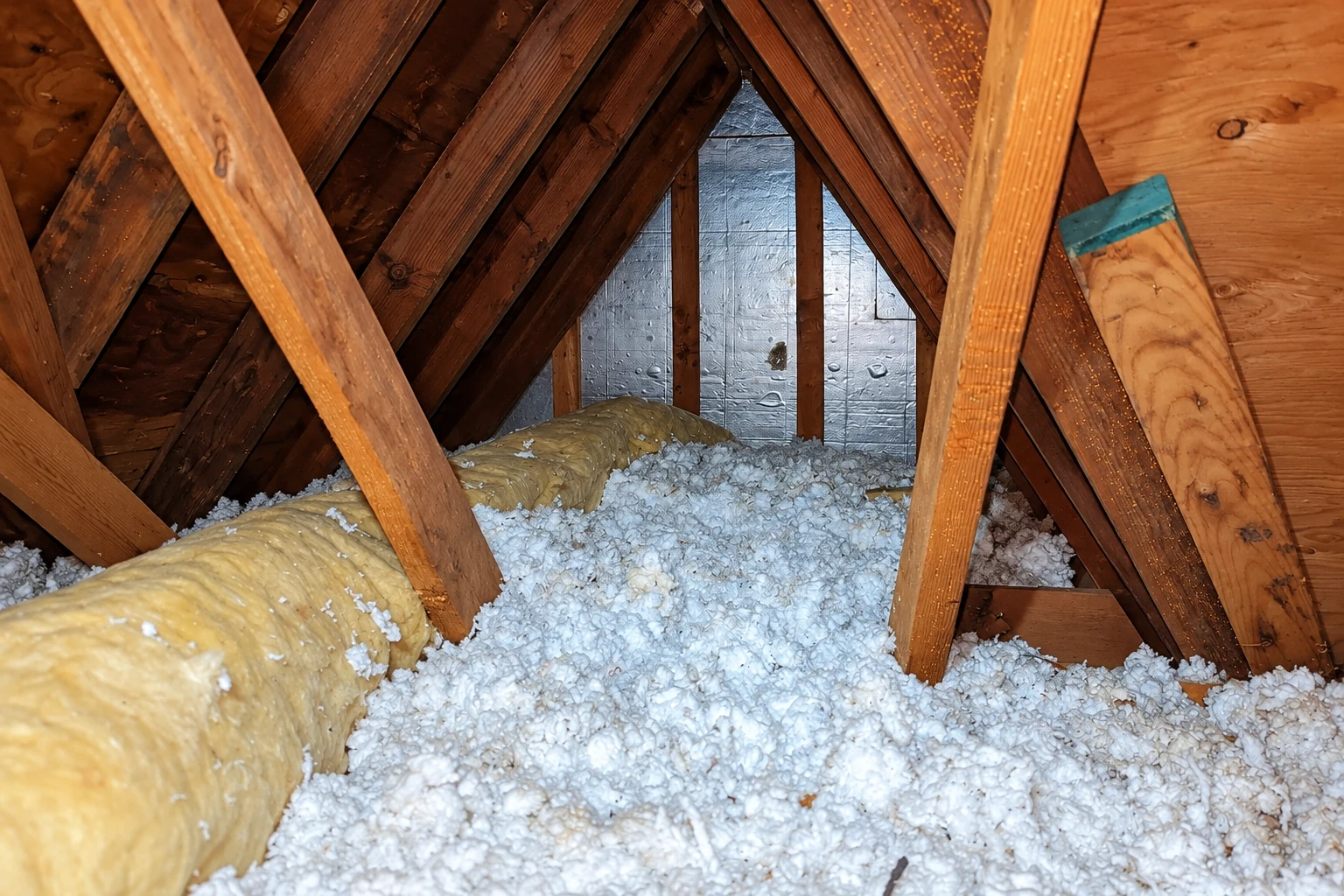
A hot room over the garage
When the upstairs bedrooms or the room over the garage run hot all summer, the ceiling above them is usually thin or leaky, so that's the first place I look.
A hot upstairs and a high power bill usually point to a thin attic. We seal the gaps first, then lay an even layer.
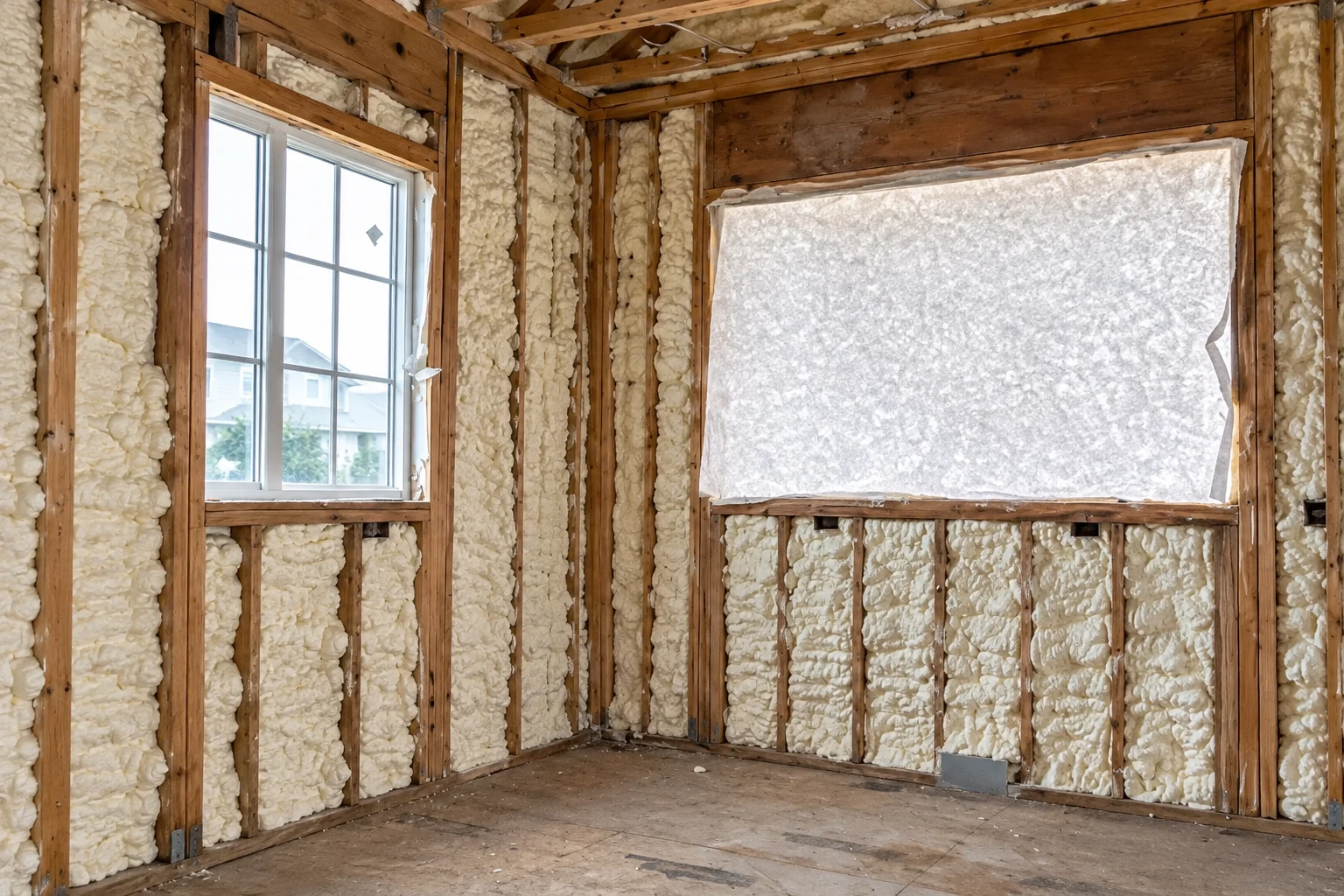
Attic insulation in Pico Rivera means we check your attic, seal the gaps in the ceiling and lay an even layer of insulation over it, so less heat moves through the ceiling and the rooms below stay more comfortable.
A lot of older houses have little or no insulation in the attic, and you usually feel it in the power bill and the rooms right under the roof. The price comes down to how big the attic is, how much old insulation has to come out first and how much sealing the ceiling needs. The schedule turns on what I find, because a roof leak or old wiring gets fixed before any insulation goes in.
Your estimate comes in writing with photos of what I found, so you see the same attic I saw before you decide anything. We're fully licensed and insured, and before work starts we check with the building office that covers your address and handle any permit and inspections the job calls for.
I go up into your attic myself and write the estimate, and you get photos of what I found, so you can see the gaps and any trouble with your own eyes.
If your roof leaks or the wiring is old, I'll tell you to fix that first, because new insulation laid over a problem just hides it until it costs more.
I spent years working in homes where people were living, so our installers keep dust off your things, cover the path to the hatch and clean up before they leave.
In an older attic, the prep matters as much as the insulation. I look for roof leaks, old wiring, bathroom fans that blow into the attic instead of outside, and anything that looks like vermiculite, a pebbly gray-brown fill, because covering any of those just buries the problem. If something turns up, I show you the photos and we sort out the order, which sometimes means a roofer or an electrician goes first, and vermiculite gets its own answer below.
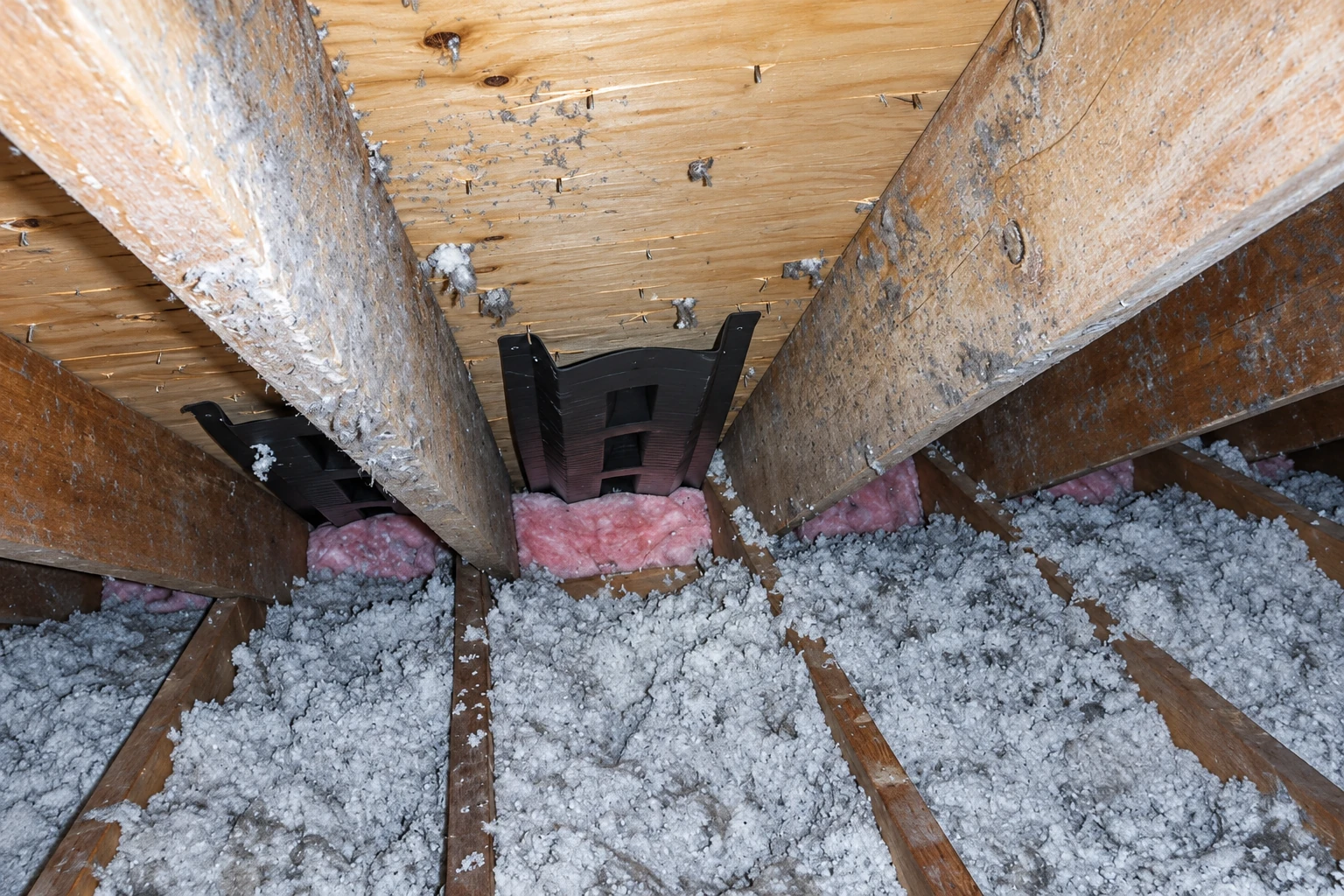
Next we seal the gaps in the ceiling around pipes, wires, light fixtures and the hatch, so the new layer isn't fighting a draft. Can lights that aren't rated to touch insulation get covers, hot flue pipes get metal collars to hold insulation back, and big open holes get solid blocking. Along the edges we set baffles, guards that keep the eave vents open, so the attic can still breathe and moisture doesn't show up in the framing.
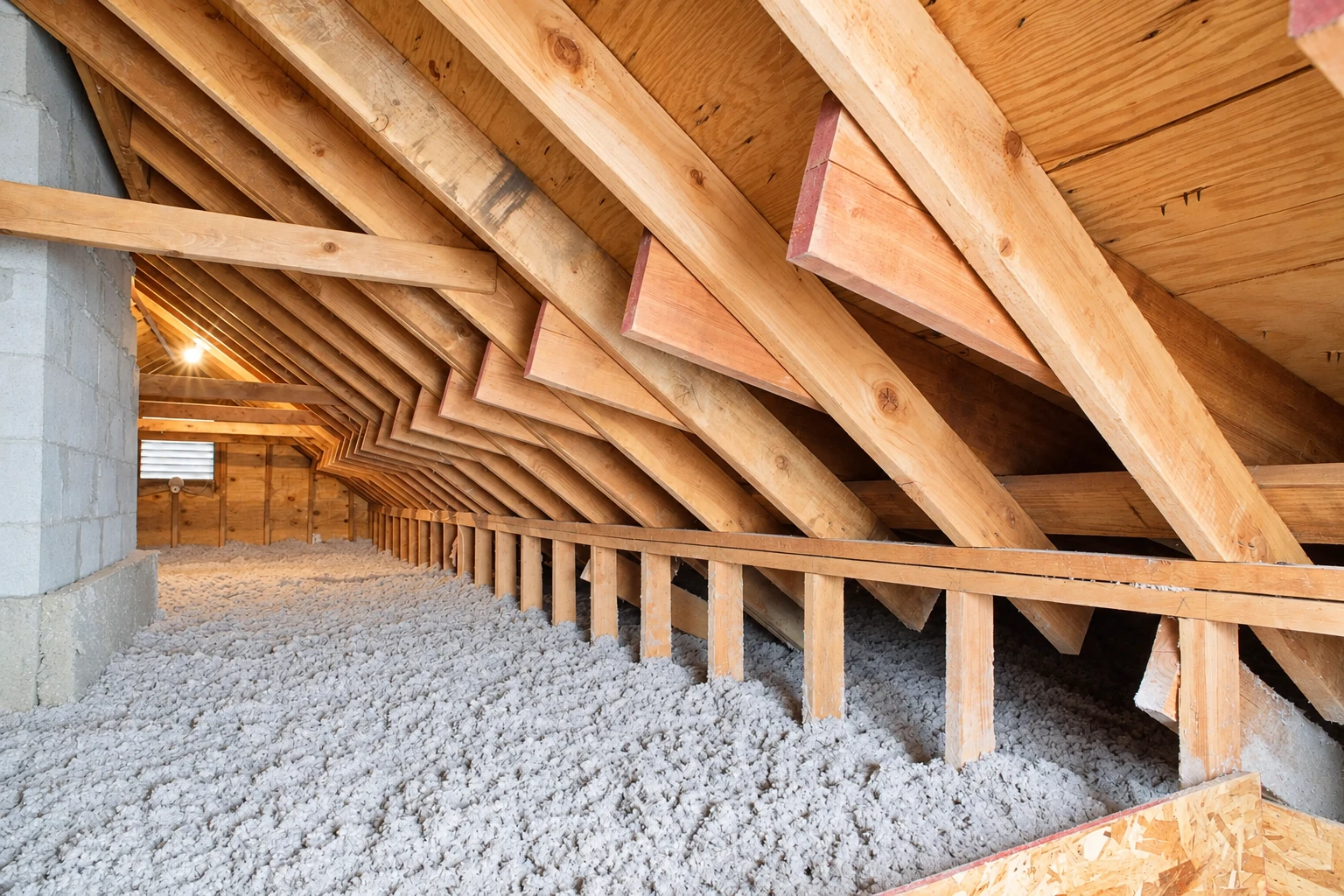
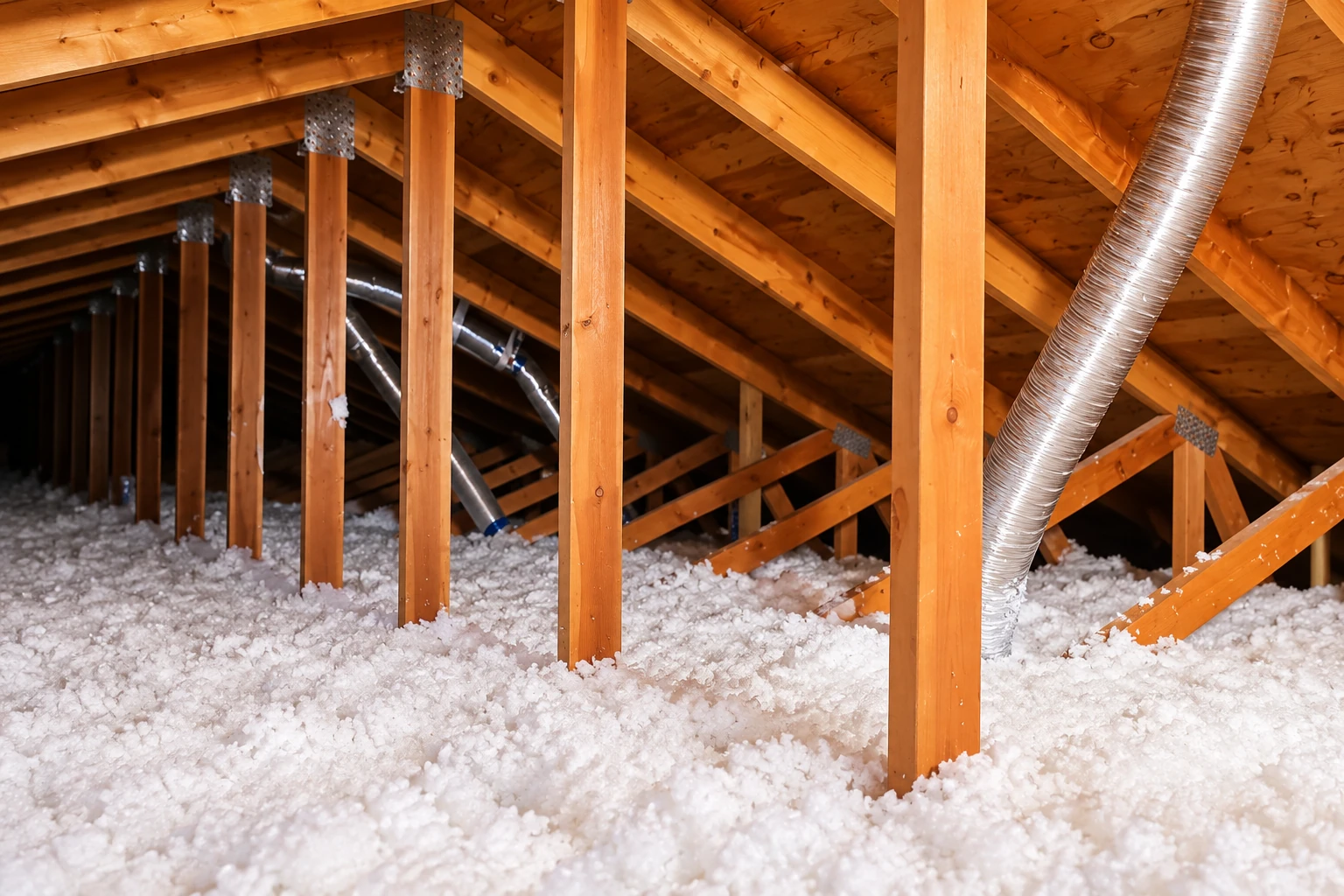
Then our installers lay blown-in insulation, loose fill blown through a hose, as evenly as they can across the whole ceiling and right out to the top of the outside walls, because the thin spots usually end up at the edges. Foam costs more and seals air while it insulates, but for most attics I'd rather seal the gaps and top up with loose fill, unless your ductwork runs up there. If the drafts aren't only overhead, our home insulation work looks at the whole house.
When the job's done, I go over the attic with you before we call it finished. Our work is satisfaction guaranteed.
When the upstairs bedrooms or the room over the garage run hot all summer, the ceiling above them is usually thin or leaky, so that's the first place I look.
Plenty of older houses around here still have a few flattened inches or bare spots, and measuring what's there tells us whether a top-up will do or the old layer should come out.
If the old layer got wet from a roof leak or is full of rodent droppings, new material on top keeps the problem, so it usually has to come out first.
Landlords and property managers call us when a unit sits empty and the attic is easy to reach, because a problem covered up now costs more once it shows up later.
Send the form and we'll reply within one business day to set a time. I'll come out, look at the attic and give you a free written estimate with photos, with no obligation.
The year your house was built tells me what I'm likely to find up there, from thin old fill to wiring that may need an electrician before anything else.
If you've seen a ceiling stain, a leak after rain or a fan that vents into the attic, say so in the form, and I'll look at those spots first.
If you keep a lot of belongings in the attic, tell us, because moving them and storing them for a while may need to be part of the plan.
These sample photos show blown-in layers, baffles at the eaves and sealed hatches, details worth talking through at your estimate.
Here are straight answers to what people ask most about cost, sealing, old vermiculite, permits and who can legally do the work.
Attic insulation installation in the Los Angeles area usually costs about $1 to $4 per square foot, with more added when old insulation has to be removed first. Where your attic lands in that range depends on its size, how much sealing it needs and what I find up there. Your written estimate gives you the price for your attic.
Sealing first closes the gaps air moves through, which insulation by itself doesn't do. Sealing where pipes, wires and lights pass through the ceiling saves energy, lowers your bills and helps head off moisture problems in the attic, so we plan it as part of the insulation job rather than an extra.
It has to be tested before anyone seals or insulates over it, because a federal energy guide says vermiculite may contain asbestos. If I see something that looks like it, we stop, show you the photos and point you toward testing and professional advice. We don't schedule the insulation work until you know what you've got.
The city's permit list doesn't name attic insulation, so the place to ask is the Pico Rivera Building Division at (562) 801-4360. Electrical work almost always needs a permit there, and installing or changing HVAC does too, which matters if the inspection turns up wiring or duct problems. We check before work starts, as mentioned above.
A licensed contractor has to do it whenever the job needs a permit or uses hired workers, even if it costs under $1,000. The state licensing board exempts only jobs under $1,000 that need no permit and are done by someone who hires no one, so a crew working in your attic needs a license.
Call (562) 271-1051 any day from 7 AM to 11 PM, or send the form, and we'll set up a time to look.