Spray foam insulation
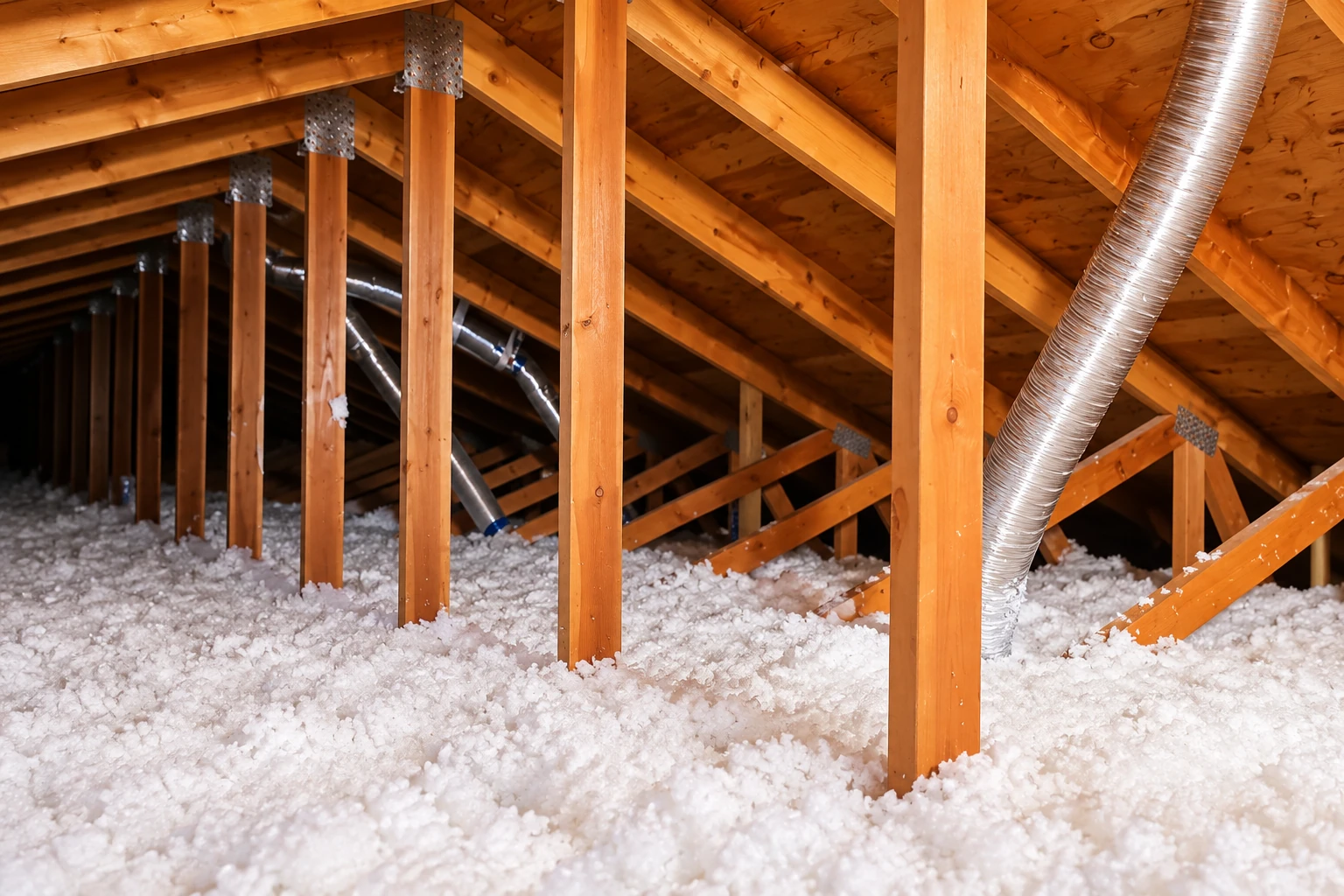
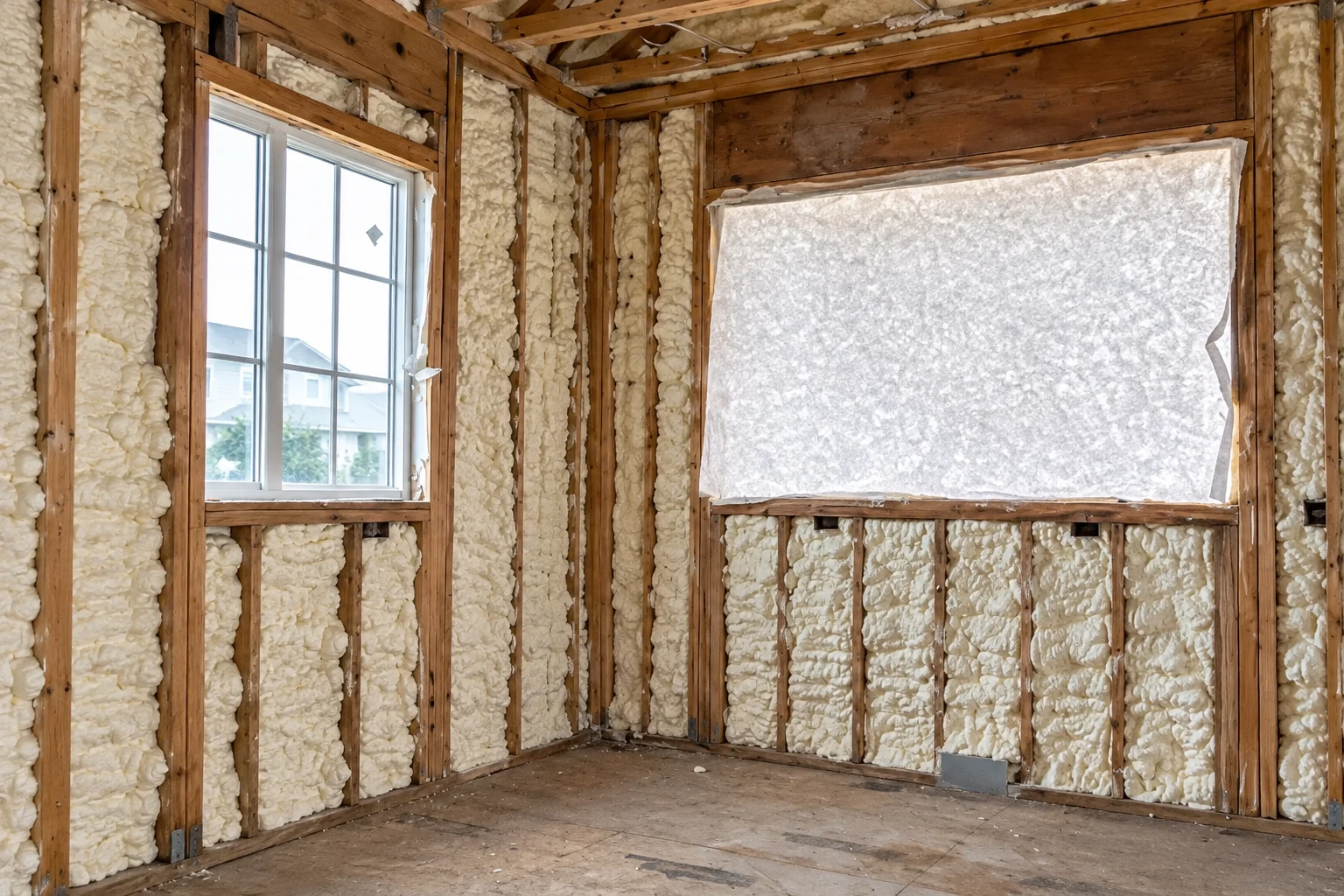
Spray foam seals air and insulates in one pass, but it costs more. In most Downey attics we'd rather seal the gaps and top up loose fill, unless your ductwork runs up there, which is where foam earns its price.
B&J Pico Rivera Insulation Company is an insulation contractor working in Downey, CA. We seal the air leaks in your attic, crawl space and walls, then add or replace insulation so your house is easier to keep comfortable.
Downey sits right next to our home city of Pico Rivera, so it's an easy drive for us. A lot of what we see here is older single-family houses with attic insulation that went in years ago and is now packed down and thin at the edges, or a crawl space under a raised floor that lets cold air in. Landlords with apartments and condos call us too, and we see the same kinds of houses next door in Pico Rivera and Norwalk.
The price mostly comes down to how big the attic or crawl space is and how easy it is to get into, how many inches are already up there, whether old material has to come out first, and how many gaps need sealing. The schedule turns on removal and on whether a roof leak or old wiring has to be fixed before we insulate. Your written estimate gives you your own figure.
The city splits Downey into two energy code zones, one for most of the city and another north of Vista Del Rio, and those zones shape the building rules a house falls under. Downey also adds its own changes to the state building code, so we work from what the city actually uses.
If I find a roof leak or old wiring in your attic, I'll tell you to fix that before we insulate. New insulation laid over either one just hides a problem you'll pay for later.
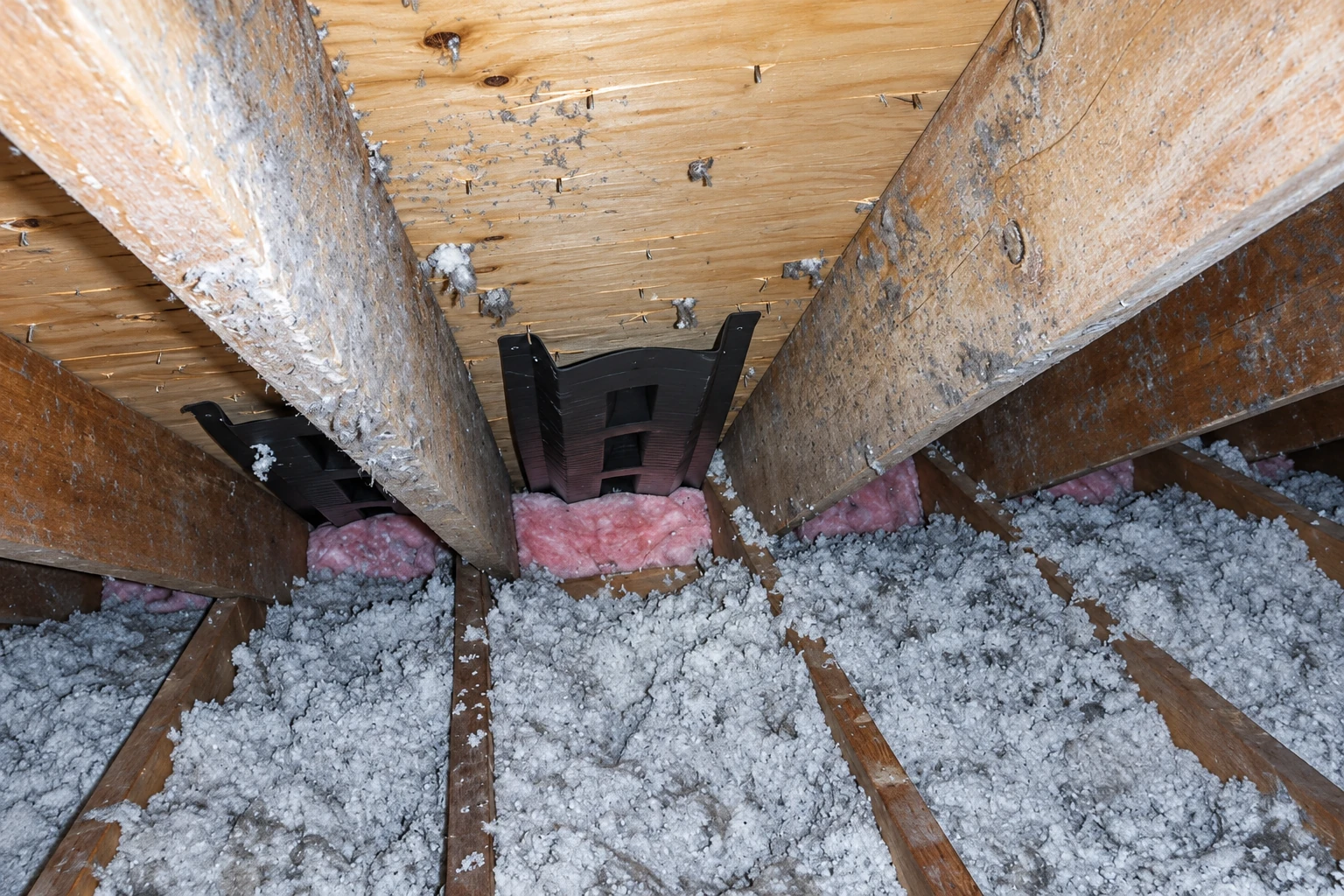
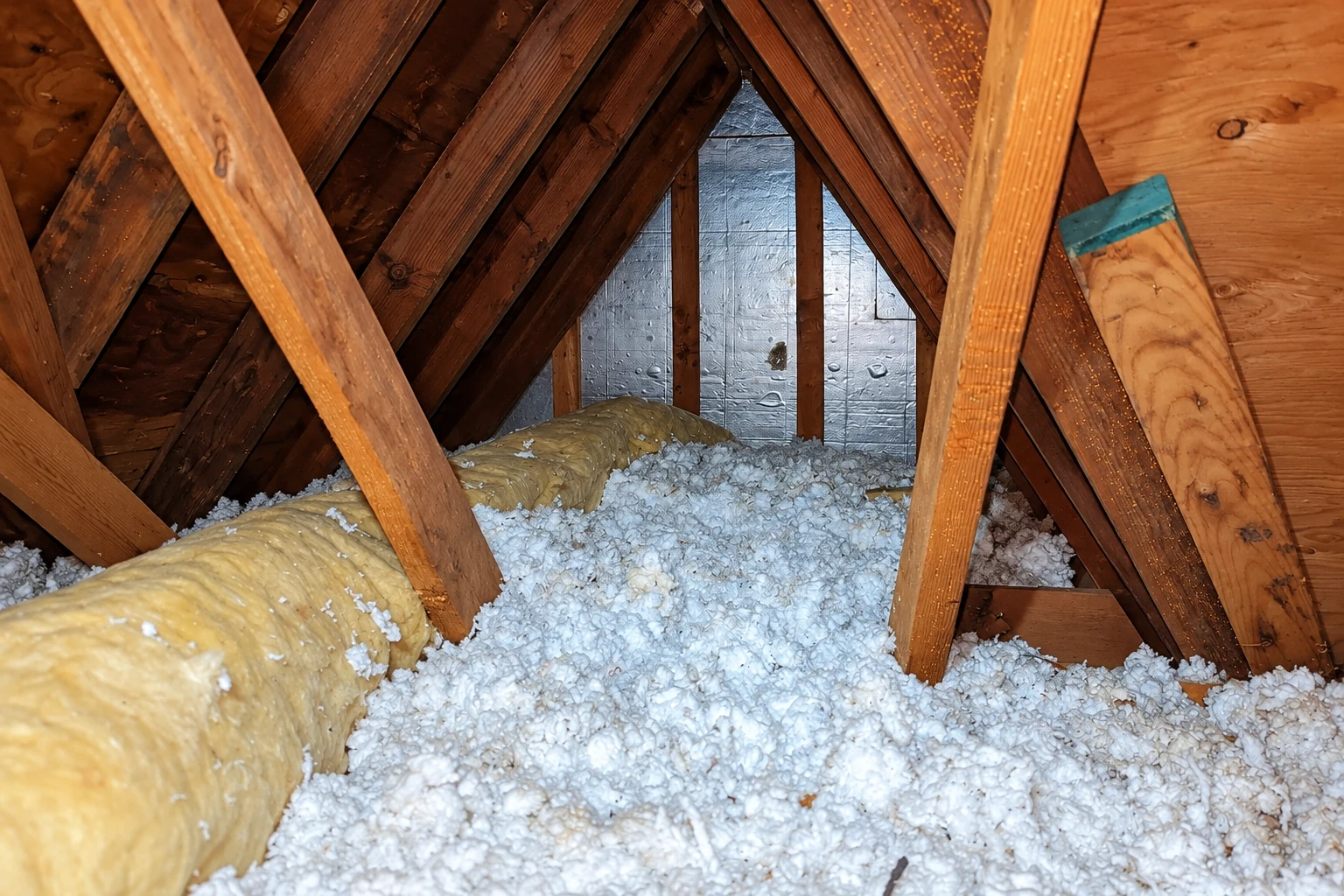
Attics often end up deep in the middle and thin at the edges, which is backward, because the edges sit over your walls. Our installers bring coverage out to the eaves without burying the vents.
Our installers do the work, and I walk through it with you before we call it done. You see the coverage and the sealed gaps yourself, so you know what you paid for.
Spray foam seals air and insulates in one pass, but it costs more. In most Downey attics we'd rather seal the gaps and top up loose fill, unless your ductwork runs up there, which is where foam earns its price.
Most attic calls start with a hot room and a high power bill. I measure the inches already up there, check the edges over the walls where coverage runs thin, and look at the eave vents before quoting.
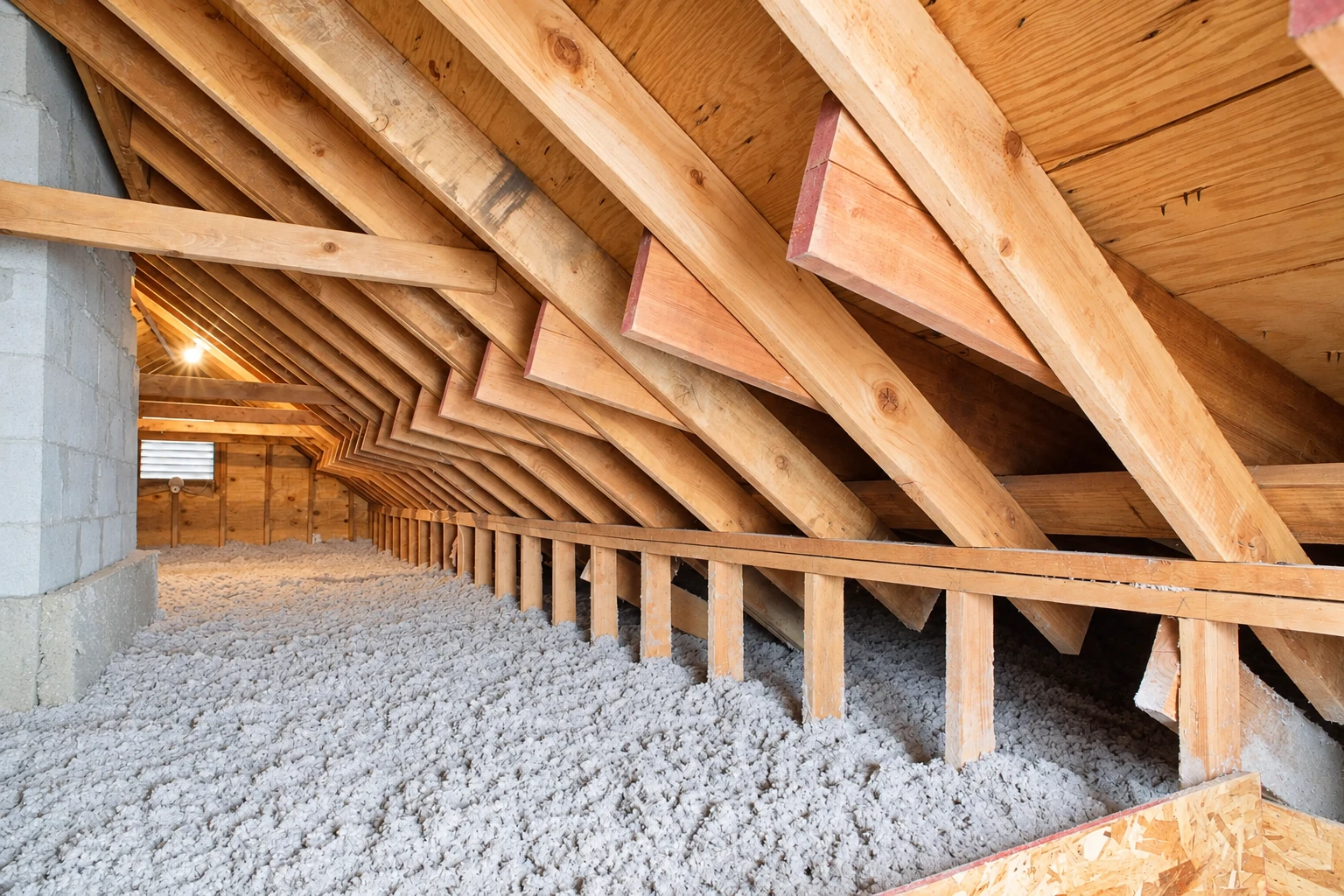
Blown-in is loose fill sent through a hose, and it's how we top up most older attics here. We keep it off the eave vents so the attic can still breathe and the framing stays dry.
When the whole house feels drafty, we look at the attic, the walls and the floor together, because a leak in one spot can undo new insulation in another. You get one plan, in order of what matters most.
If the old insulation got soaked from a roof leak or is full of droppings, it comes out first. Putting new material over it just hides the problem, and you'd be paying to cover it up.
Plenty of older houses here sit on raised floors with a crawl space under them, and that's usually where cold floors come from. We check for moisture first, then insulate between the floor joists.
Walls in older houses are often empty or close to it. We can fill closed walls through small holes or insulate open walls during a remodel, and I'll tell you which your house allows once I've looked.
Air sealing means closing gaps before we insulate, around windows, outlets, plumbing under sinks and the crawl space. Skip it and the new insulation ends up fighting a draft it can't stop.
Few houses around here have a basement, but some have a below-grade room or a lower level. Where that's the case, we deal with moisture on the walls first, then insulate so the space stays dry.
Closed-cell foam is dense foam that also blocks moisture, so it suits spots like rim joists and damp walls. It costs more than other options, so we use it where that moisture block really matters.
Open-cell foam is softer and lighter, and it fills odd cavities and quiets noise well. It doesn't block moisture the way closed-cell does, so we keep it to dry spaces like the underside of a roof deck.
We insulate small commercial spaces too, such as shops, offices and the shared areas of apartment buildings. Property managers call us because a problem covered up now costs more to fix later.
A crawl space vapor barrier is a sheet laid over the dirt to keep ground moisture from rising into your floor. We check for standing water first, then lap and seal the seams so moisture can't slip through.
On walls and floors, the vapor barrier has to go on the right side of the insulation, or it can trap moisture instead of stopping it. We sort that out before anything gets covered.
Attic air sealing closes the holes between your rooms and the attic, around can lights, the hatch, the plumbing vent and the tops of the walls. It's usually the first step before we add any insulation up there.
Retrofit means adding insulation to a house that's already built and lived in. We work around your furniture and your day, cover what's under the attic hatch, and clean up before we leave.
Send the form and we'll get back to you within one business day to set a time. I come out, look at the job and write your estimate, free and with no obligation.
I go into the attic or crawl space myself and write the estimate. You get photos of what I found along with it, so you can see why each line is there.
Homeowners with older houses call us, and so do landlords and property managers who would rather hear about a problem now than find it covered up later.
We're fully licensed and insured, and we've run this business since 2020. Before that I spent years crawling attics and crawl spaces for a property management company. Satisfaction guaranteed.
Straight answers to what Downey homeowners and landlords usually ask about permits, licenses and the day the crew shows up.
Possibly, and we find out for your address before any work starts. Downey's own wording is that generally any alteration or repair to an existing building needs a permit, and insulation isn't one of the examples it lists. So we ask the city's Building and Safety Division, and if a permit is needed, we handle the paperwork and inspections.
Yes, if you own the single-family house and live in it, the city can issue the permit to you as an owner-builder. For duplexes, townhomes, condos and apartments, Downey issues permits only to California licensed contractors. The city's permit information page covers who can apply, and if you hire us and the job needs one, we take care of it.
Yes. The city requires a business license for any kind of business done in Downey, and that includes contractors whose offices are in another city, like ours in Pico Rivera. A contractor also needs a current Downey business license to pull a permit there, so it's a fair question to ask anyone you're thinking of hiring.
For blown-in work you can usually stay home, as long as kids and pets keep clear of the hatch. Spray foam is different, because everyone stays out until its re-entry time, the wait before it's safe to come back inside. The foam maker sets that wait, and we tell you yours before the crew starts.
These are the cities with their own page on our site. We also work in other nearby cities and county areas, so if yours isn't listed, call or send the form and ask.
Call (562) 271-1051 any day, 7 AM to 11 PM, or use the form to tell us which room runs hot.